Pulp & Paper Industry

Mechanical Seals for the Pulp & Paper Industry

Pulp and paper mills run pumps on media that combines two of the harder sealing problems in industry at once: abrasive fiber and filler content that erodes standard seal faces, and process streams — white water, black liquor, bleach plant chemicals — that range from mildly corrosive to aggressively so. A stock pump seal chosen for the fiber content alone but not the chemical exposure, or vice versa, tends to fail well ahead of its expected service life, and unplanned downtime on a continuous paper machine line carries production losses that scale quickly.

At Leak-Pack Engineering, we design and manufacture mechanical seals for pulp and paper mill equipment — stock pumps, white water systems, black liquor and chemical recovery pumps, and bleach plant equipment — engineered around the specific fiber consistency, filler content, and chemical exposure of each process stage. Our engineering team works from your actual stock and stream data, consistent with the process knowledge published by TAPPI, to recommend seal face materials, arrangement, and support systems built for continuous mill operation.

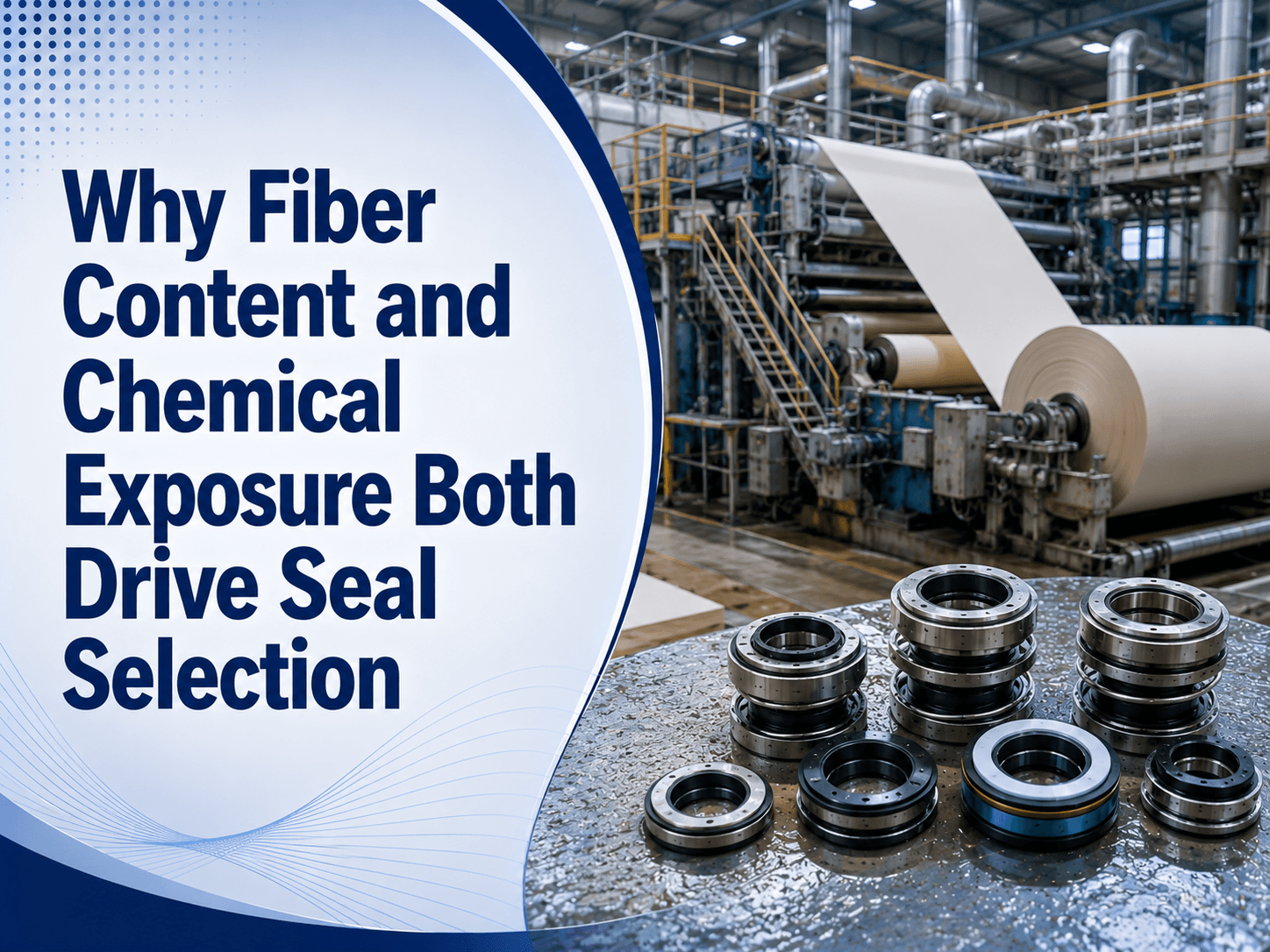
Why Fiber Content and Chemical Exposure Both Drive Seal Selection

Why Fiber Content and Chemical Exposure Both Drive Seal Selection

In pulp and paper, seal selection has to solve two problems simultaneously rather than one. Fiber and filler content — present at every stage from stock preparation through the paper machine — erodes and clogs standard single-spring seal designs, while the chemical stream itself, particularly in the chemical recovery cycle and bleach plant, demands materials selected the same way a chemical processing seal would be specified. Treating either problem in isolation — specifying purely for abrasion resistance without chemical compatibility, or vice versa — is one of the most common reasons stock and recovery pumps run through seals faster than a mill’s maintenance budget expects.

Mills also operate under continuous-process economics: a paper machine stoppage doesn’t just lose the output of the down pump, it can force a full machine shutdown and restart, with associated sheet breaks, grade changes, and startup waste that compound the direct cost of the outage. This is why seal specifications for this industry lean toward maximum reliability and predictable service intervals, in line with the broader emphasis on continuous-process wastewater and discharge management the industry operates under, including EPA effluent guidelines for pulp, paper and paperboard mills, which shape how mills manage their process water streams end to end.

This combination of abrasive and chemical duty is also why seal support systems earn their place on stock and recovery pumps specifically — a properly flushed and cooled seal chamber does more to extend service life on this equipment than face material selection alone.

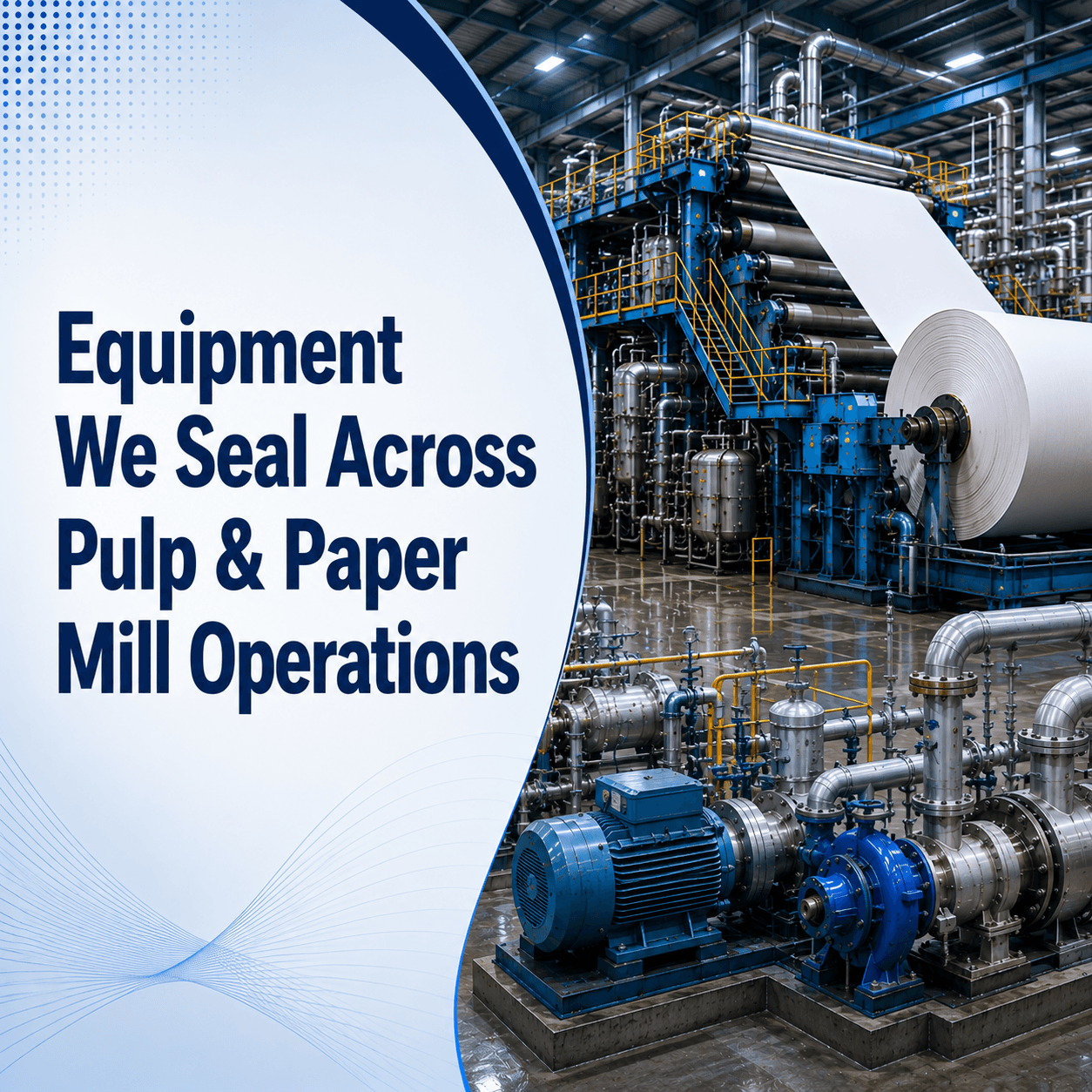
Equipment We Seal Across Pulp & Paper Mill Operations

Equipment We Seal Across Pulp & Paper Mill Operations

Mills run equipment from wood yard and pulping through the paper machine and finishing, each stage presenting a different fiber, filler, and chemical profile. We supply seals across this full range:

  • Stock Pumps & Fiber Transfer: Stock pumps handle fiber suspensions at varying consistency that clog standard single-spring seals quickly. Our Multi Spring Mechanical Seals distribute closing force across multiple springs to resist this fouling across the stock preparation and approach flow systems.
  • High-Consistency Pulp Equipment & Refiners: Refiners and high-consistency pulpers run demanding mechanical duty on thick, abrasive stock, where seal replacement without full disassembly matters on continuously running lines — our Split Mechanical Seals install without full shaft removal.
  • Black Liquor & Chemical Recovery Pumps: The chemical recovery cycle handles hot, causticized liquor that demands chemical-resistant seal materials similar to chemical process service. We typically specify Cartridge Mechanical Seals with chemically resistant secondary seals for consistent, repeatable installation here.
  • Bleach Plant Equipment: Chlorine dioxide and other bleaching agents are aggressively oxidizing, calling for elastomer-free or highly chemical-resistant designs — our PTFE / Teflon Bellow Mechanical Seals remove the dynamic elastomer entirely for this service.
    • White water and filtrate recirculation systems — seals for continuous, high-duty-cycle water reuse loops
    • Paper machine wet end and press section pumps — seals supporting continuous sheet-forming operation
    • Chest and pulper agitators — Agitator & Mixer Seals for stock chests and repulping equipment
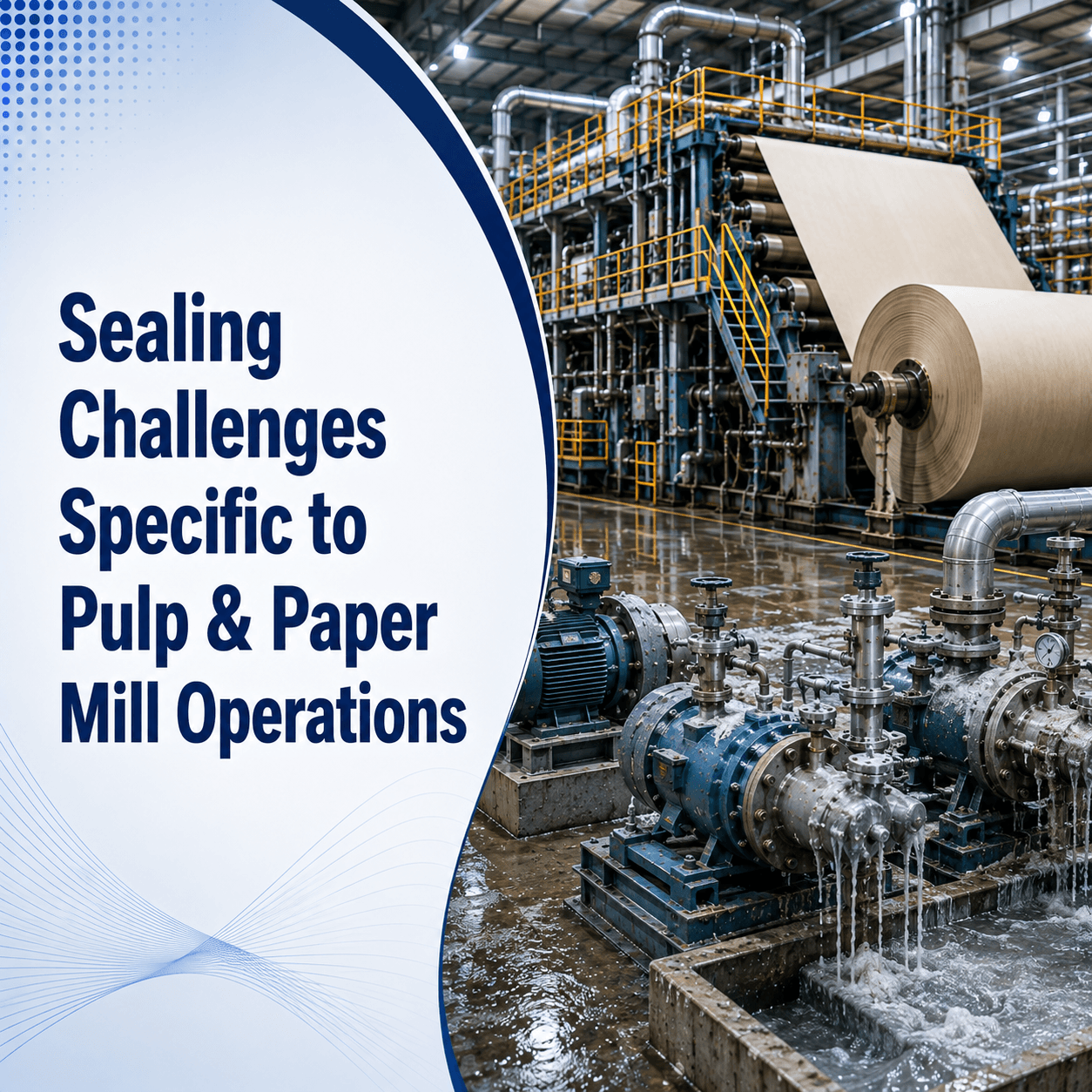
Sealing Challenges Specific to Pulp & Paper Mill Operations

Sealing Challenges Specific to Pulp & Paper Mill Operations

Abrasive Fiber & Filler Content

  • Fiber suspensions at varying consistency that clog standard single-spring seal designs
  • Filler and coating pigment content that accelerates seal face wear
  • Stock consistency that varies across grade changes on the same equipment

Chemical Exposure in Recovery & Bleaching

  • Hot, causticized black liquor in the chemical recovery cycle
  • Aggressively oxidizing bleaching agents such as chlorine dioxide
  • Chemical stream composition that varies by mill process and grade

Continuous-Process Reliability

  • Paper machine downtime consequences that extend well beyond the cost of the down pump
  • Limited planned maintenance windows on continuously running stock and recovery systems
  • Process water and discharge management considerations tied to mill effluent regulations

As in other heavy process industries, these rarely present in isolation — a stock pump on a continuously running line typically has to resist fiber-driven fouling, tolerate whatever chemical carryover reaches it, and deliver predictable service life through a full production campaign, all at once. We size the specification to all three together.

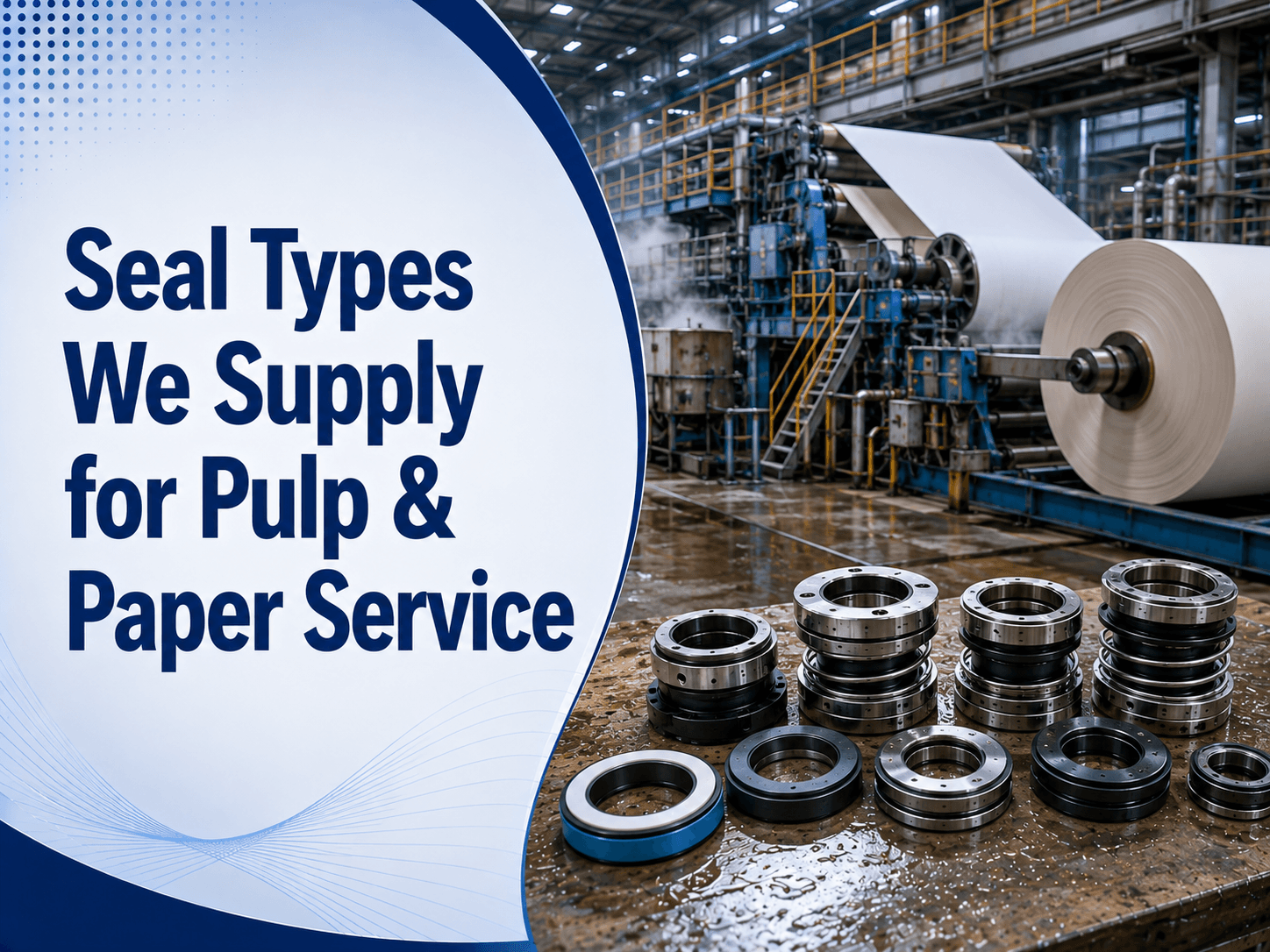
Seal Types We Supply for Pulp & Paper Service

Seal Types We Supply for Pulp & Paper Service

  • Multi Spring Mechanical Seals: Resist clogging and fouling in fiber-bearing stock and pulp streams where a single-spring design would foul quickly.
  • Split Mechanical Seals: For high-consistency pulpers, refiners, and large stock pumps where full shaft removal for seal replacement isn’t practical on a continuously running line.
  • Cartridge Mechanical Seals: Pre-assembled and pre-set for consistent, repeatable installation across a mill’s black liquor and chemical recovery pump fleet.
  • PTFE / Teflon Bellow Mechanical Seals: Elastomer-free design for bleach plant service where chlorine dioxide and other oxidizing agents would degrade a standard O-ring.
  • Agitator & Mixer Seals: Built for stock chests, pulpers, and repulping equipment running continuous fiber suspension agitation.
  • Seal Support Systems: Flush and barrier fluid systems that keep seal faces clear of fiber buildup on the dirtiest stock streams in the mill, extending service intervals beyond what an unsupported seal achieves.
Common Causes of Seal Failure in Pulp & Paper Mills — and How We Design Around Them

Common Causes of Seal Failure in Pulp & Paper Mills — and How We Design Around Them

  • Fiber and filler fouling on stock pumps — addressed with multi-spring designs that resist clogging between springs
  • Chemical attack in the recovery cycle and bleach plant — addressed through chemical-resistant secondary seals or elastomer-free PTFE bellow designs where oxidizing agents are present
  • Dry running during grade changes and consistency swings — addressed through support system and flush plan design that accounts for the full range of stock consistency the pump sees
  • Abrasive wear from filler and coating pigment content — addressed with hard-face combinations sized to the actual filler load, not a generic “pulp duty” default
  • Seal failure treated as routine wear rather than a fiber/chemical mismatch — addressed by reviewing failed seal components against the actual stock and chemical stream data before specifying a replacement
Our Engineering & Support Process

Our Engineering & Support Process

  • Stock and stream review — fiber consistency, filler content, chemical composition, and temperature
  • Seal arrangement recommendation based on abrasion resistance and chemical exposure severity
  • Material selection matched to both the fiber load and the chemical stream, not either in isolation
  • Drawing approval before manufacturing begins — including fully custom-engineered designs for non-standard or legacy mill equipment
  • In-house manufacturing and quality testing with material traceability documentation
  • Installation guidance and, where required, on-site commissioning support timed to planned mill outages
Why Pulp & Paper Mills Choose Leak-Pack

Why Pulp & Paper Mills Choose Leak-Pack

  • Seal specifications built for both fiber content and chemical exposure, not one addressed at the expense of the other
  • Multi-spring and split designs built for continuously running stock and high-consistency pulp equipment
  • Elastomer-free bleach plant seals for aggressively oxidizing chemical service
  • Support systems that extend service intervals on the dirtiest stock streams in the mill
  • Fast turnaround for replacement seals to limit paper machine downtime exposure
  • Direct engineering support — not just a catalogue sale

Material Selection Guide

Below is a general guide to the materials we typically recommend by pulp and paper application. Final material selection is always confirmed against your specific stock consistency, filler content, and chemical stream composition.

hApplicationhhSeal Face CombinationhhSecondary Seal / ElastomerhhWetted Metallurgyh
Stock & pulp stream transferTungsten Carbide vs. Silicon CarbideEPDM / FKM316 SS / Duplex
White water & filtrate systemsSilicon Carbide vs. CarbonEPDM316 Stainless Steel
Black liquor & chemical recoverySilicon Carbide vs. Silicon CarbideFFKM (Kalrez-type)316 SS / Hastelloy
High-consistency pulp & refinersTungsten Carbide vs. Silicon CarbideEPDM / FKM316 SS / Duplex
Bleach plant (chlorine dioxide, etc.)Silicon Carbide vs. Silicon CarbidePTFE / FFKM316 SS / Hastelloy

Frequently Asked Questions

Yes. Our multi-spring seal designs distribute closing force across multiple springs, resisting the clogging and fouling that a single-spring design experiences in fiber-bearing stock and pulp streams.

Yes. We select chemical-resistant secondary seals and metallurgy for the hot, causticized liquor typical of the chemical recovery cycle, based on your specific stream composition and temperature.

Yes. Our PTFE / Teflon Bellow Mechanical Seals remove the dynamic elastomer entirely, for bleach plant service involving chlorine dioxide and other aggressively oxidizing agents.

We treat these as a single specification problem — reviewing your actual stock consistency, filler content, and chemical stream data together, rather than optimizing for abrasion resistance or chemical compatibility in isolation.

Where the pump configuration allows it, our split seal designs install without full shaft removal, helping seal replacement fit within limited planned maintenance windows on continuously running lines.

Yes. We engineer flush and barrier fluid support systems that keep seal faces clear of fiber buildup, extending service intervals beyond what an unsupported seal achieves on heavy stock streams.

Yes. We offer fully custom-engineered seal designs for legacy or non-standard pump configurations common in older mills.

Lead times depend on seal size, material, and arrangement complexity. Given how quickly paper machine downtime costs compound, we prioritize fast turnaround on pulp and paper replacement seals — share your seal drawing or pump details with our team for a firm timeline.

Talk to Our Sealing Engineers

Every mill runs a different combination of stock consistency, filler content, and chemical stream composition, which is why we don’t work off a fixed catalogue selection for this industry — every seal we quote starts with your actual process data. We’re happy to work alongside your mill maintenance and reliability teams to review seal specifications across an entire pump fleet, not just a single problem pump.

Send us your pump specifications — stock consistency, filler content, chemical stream composition, and duty cycle — and our engineering team will recommend the right seal solution for your application. Explore our full range of mechanical seals by industry or send an enquiry directly.