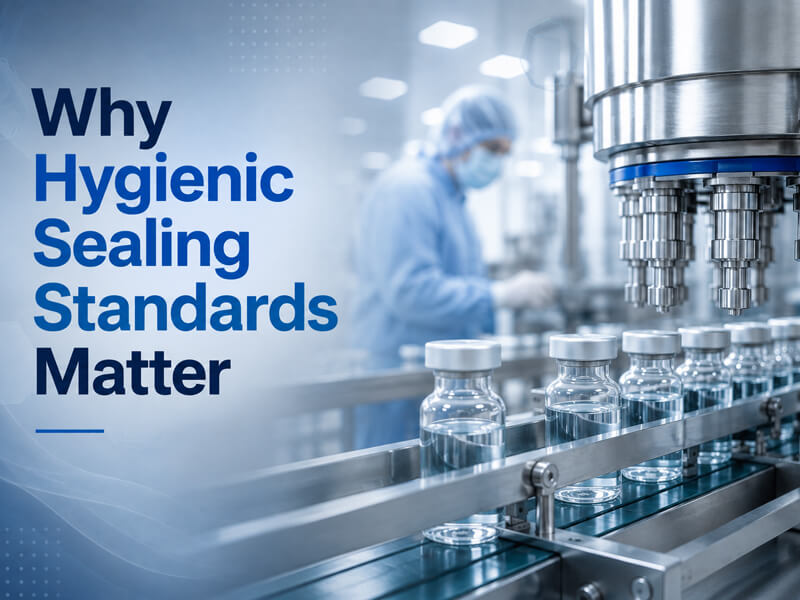
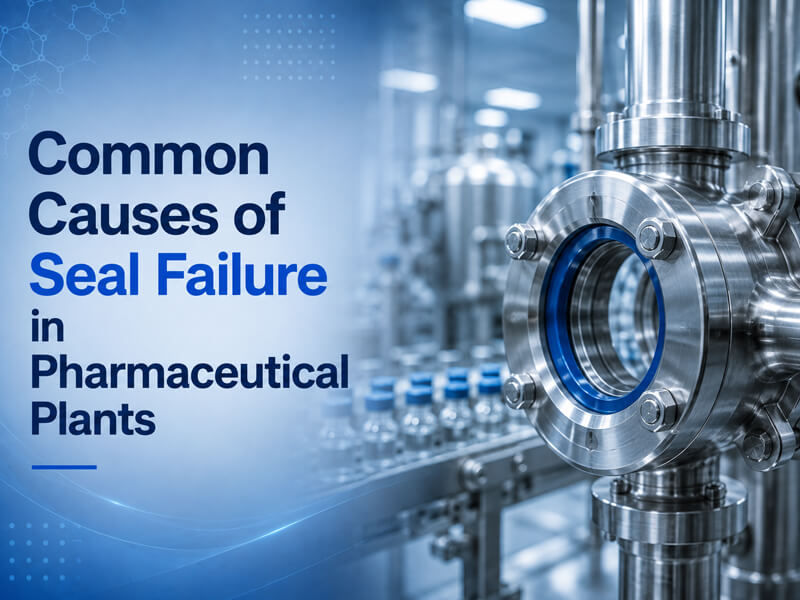
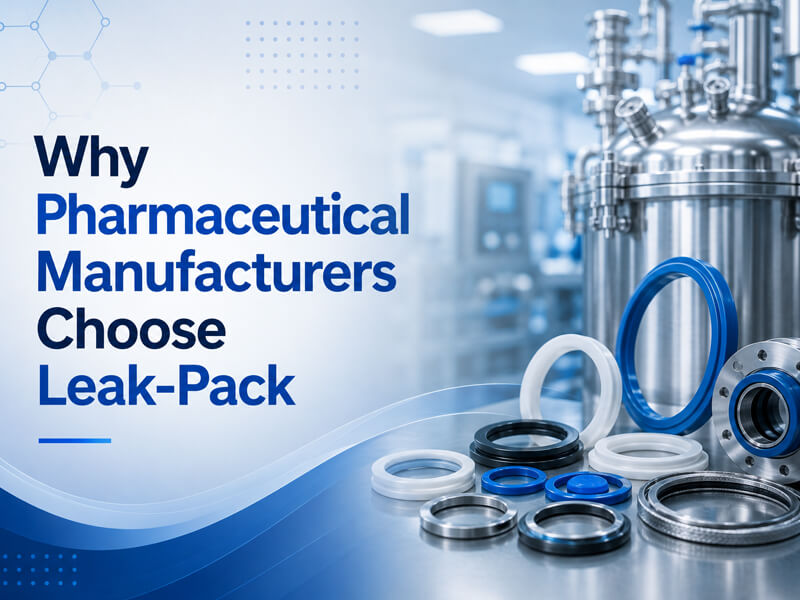
Pharmaceutical manufacturing runs on a standard most other industries don’t have to meet: every wetted surface a process fluid touches has to be contamination-free, cleanable, and validated. Mechanical seals on reactors, mixers, and transfer pumps sit right at that boundary — they’re one of the few rotating components in direct or near-direct contact with the product, which means a poorly specified seal isn’t just a maintenance risk, it’s a product quality and regulatory risk.
At Leak-Pack Engineering, we design and manufacture mechanical seals for pharmaceutical process equipment, built to hygienic design standards and manufactured from materials that support clean-in-place (CIP) and steam-in-place (SIP) validation. Whether you’re sealing a bioreactor, a sterile mixing vessel, or a solvent transfer pump in an API manufacturing line, our engineering team works from your process and validation requirements — in line with FDA Current Good Manufacturing Practice (CGMP) regulations — to recommend the right seal design, materials, and documentation.

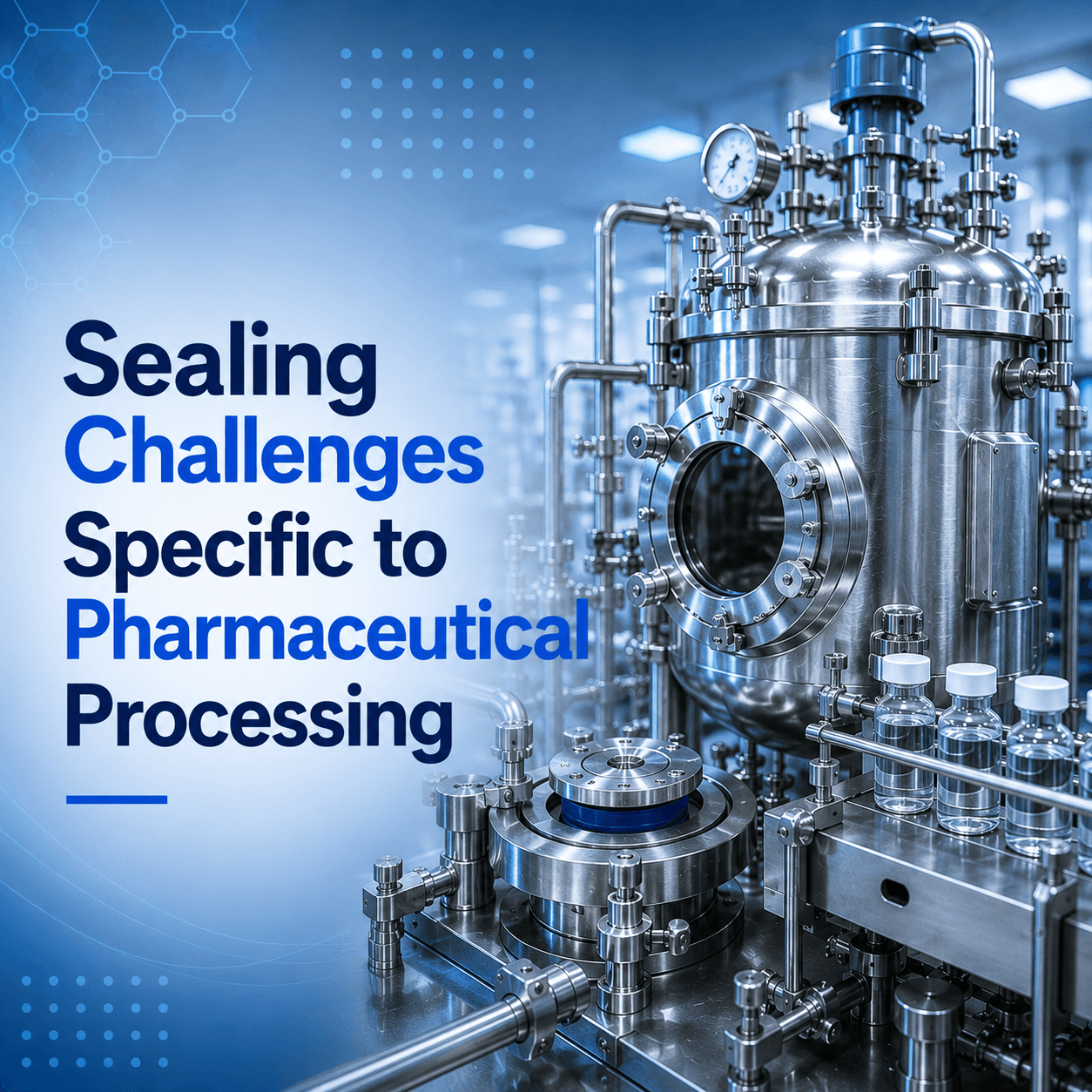
In pharmaceutical processing, a seal failure carries consequences that go well beyond downtime. A leaking seal on a sterile mixing vessel can introduce a contamination event that scraps an entire batch. A seal with crevices or dead legs that don’t clean out fully under CIP can become a site for microbial growth between batches. And a seal built from materials that aren’t validated for pharmaceutical contact can compromise a product’s regulatory approval regardless of how well it seals mechanically.
That’s why hygienic seal design isn’t just about preventing leakage — it’s about surface finish, crevice-free construction, cleanability, and material traceability, all of which have to be documented and defensible during a regulatory audit. We design every pharmaceutical seal to these requirements from the start, following hygienic design principles consistent with ASME BPE (Bioprocessing Equipment) standards, not added on afterward.
This distinction matters most during scale-up and technology transfer, when a seal design validated at pilot scale has to perform identically in full production. A seal that isn’t engineered with hygienic design and documentation in mind from the outset often becomes a bottleneck during these transitions, forcing re-validation work that a properly specified seal would have avoided.
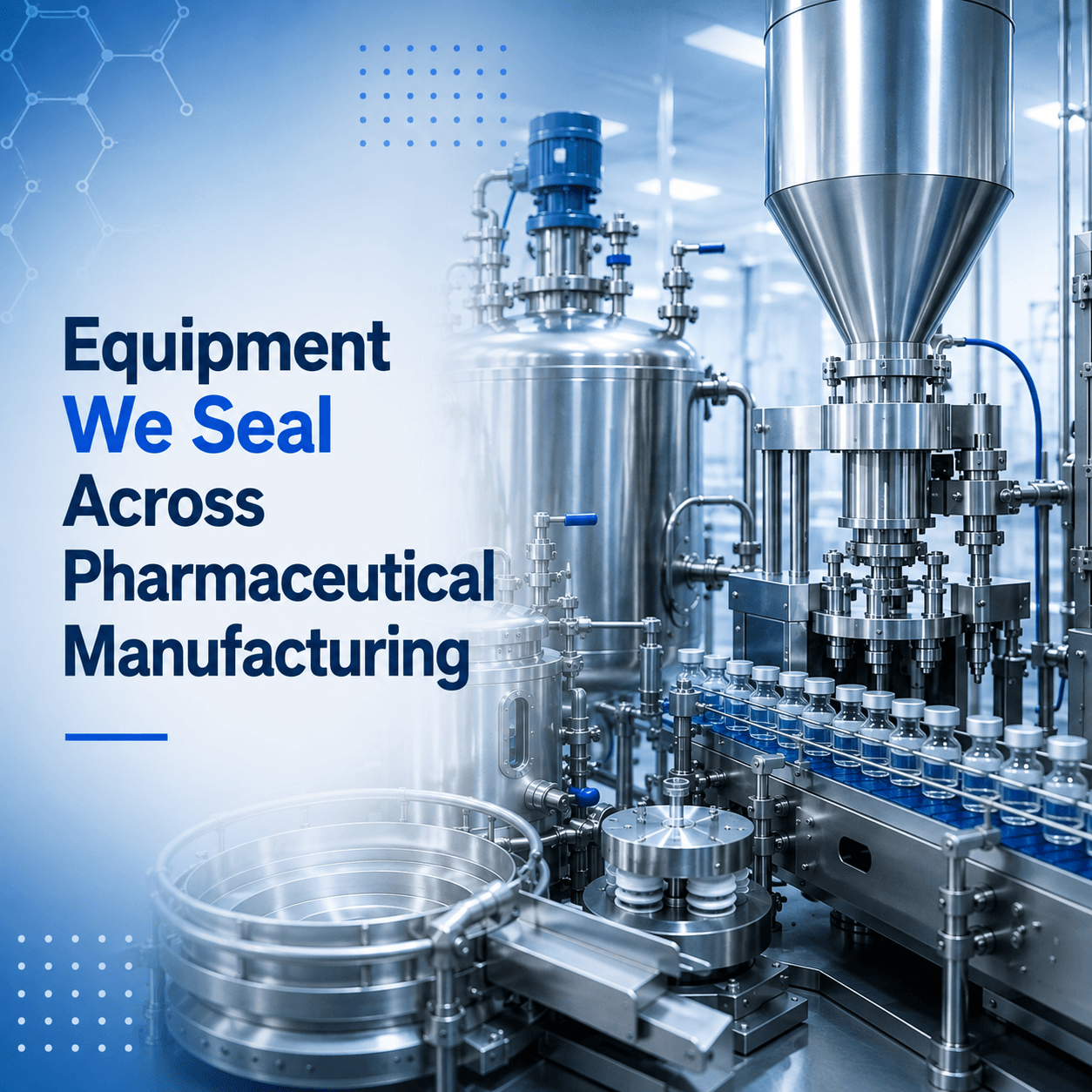
Pharmaceutical facilities run a mix of upstream (fermentation, cell culture) and downstream (purification, formulation, fill-finish) equipment, each with its own sealing demands. We supply seals across this full range, engineered to the hygienic and validation standards each stage requires:

As with chemical processing, these requirements interact rather than standing alone — a sterile bioreactor seal typically has to satisfy hygienic design, contamination control, and documentation requirements simultaneously. We treat that as a single specification exercise rather than three separate checklists.


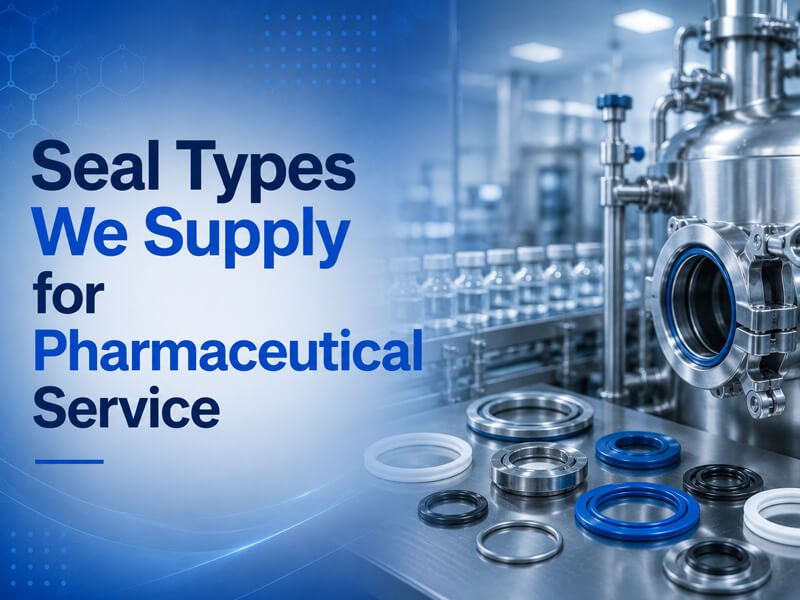
Below is a general guide to the materials we typically recommend by pharmaceutical application. Final material selection is always confirmed against your specific product contact requirements, sterilization method, and any regulatory material restrictions that apply to your facility.
| Application | Seal Face Combination | Secondary Seal / Elastomer | Wetted Metallurgy |
|---|---|---|---|
| General sterile mixing | Silicon Carbide vs. Silicon Carbide | EPDM (steam-grade) | 316L Stainless Steel |
| Bioreactors & fermenters | Silicon Carbide vs. Silicon Carbide | FFKM (Kalrez-type) | 316L Stainless Steel |
| Solvent & API transfer | Silicon Carbide vs. Silicon Carbide | FFKM (Kalrez-type) | 316L Stainless Steel |
| High-temperature SIP service | Silicon Carbide vs. Silicon Carbide | PTFE / Metal bellow (no elastomer) | 316L Stainless Steel |
| Powder handling & granulation | Silicon Carbide vs. Carbon | FKM (Viton) | 316L Stainless Steel |
Yes. We design pharmaceutical seals for crevice-free, fully cleanable construction, and specify materials — including steam-grade elastomers or elastomer-free bellow designs — rated for repeated CIP and SIP cycling.
Yes. We can supply material certification and traceability documentation for wetted components where your facility’s regulatory submissions or GMP documentation require it.
We manufacture double seal arrangements specifically for bioreactors and fermenters, engineered to maintain sterility across extended runs and to prevent any product contact with atmosphere, in addition to standard pump and agitator seals.
For applications where any contamination risk is unacceptable, we typically recommend a double seal arrangement with a validated, product-compatible barrier fluid, so the primary seal is fully backed up and the process never contacts atmosphere.
Yes. We specify seal arrangements and support systems rated for the vacuum and pressure cycling common in pharmaceutical mixing and reaction processes within a single batch.
Yes. Our cartridge and agitator seal designs are engineered for retrofit onto most existing pharmaceutical vessels and pumps, including as a direct replacement for underperforming or non-compliant competitor seals.
Yes. We supply seals for centrifuges, filtration equipment, and powder-handling systems such as granulators and tablet coaters, where product containment is as critical as it is in liquid processing.
Lead times depend on seal size, arrangement complexity, and any custom documentation requirements. For standard cartridge seal replacements, we prioritize fast turnaround to minimize batch process downtime — share your seal drawing or vessel details with our team for a firm timeline.
Every pharmaceutical process runs a different combination of product, sterilization method, and validation requirement, which is why we don’t work off a fixed catalogue selection for this industry — every seal we quote starts with your actual process and compliance requirements. We’re happy to work alongside your quality and validation teams where a seal specification needs to be reviewed as part of a broader documentation package.
Send us your reactor, mixer, or pump specifications — product contact requirements, sterilization method, and operating conditions — and our engineering team will recommend the right seal solution for your application. Explore our full range of mechanical seals by industry or send an enquiry directly.