Oil & Gas Industry

Mechanical Seals for the Oil & Gas Industry

Oil and gas operations run some of the most demanding rotating equipment in industry — pumps and compressors moving hydrocarbons, produced water, and process fluids that are frequently flammable, toxic, corrosive, or all three, often under high pressure and across a wide temperature range. The mechanical seal on that equipment is the last line of defense between contained process fluid and atmosphere, which is why seal reliability in this sector is treated as a safety and emissions issue as much as a maintenance one.

At Leak-Pack Engineering, we design and manufacture mechanical seals for upstream, midstream, and downstream oil & gas equipment, engineered to API Standard 682 principles for centrifugal and rotary pump sealing. Whether you’re sealing a crude oil transfer pump, a refinery process pump, a pipeline booster station, or a compressor auxiliary system, our engineering team works from your process conditions and hazardous area classification to recommend the right seal design, arrangement, and support system.

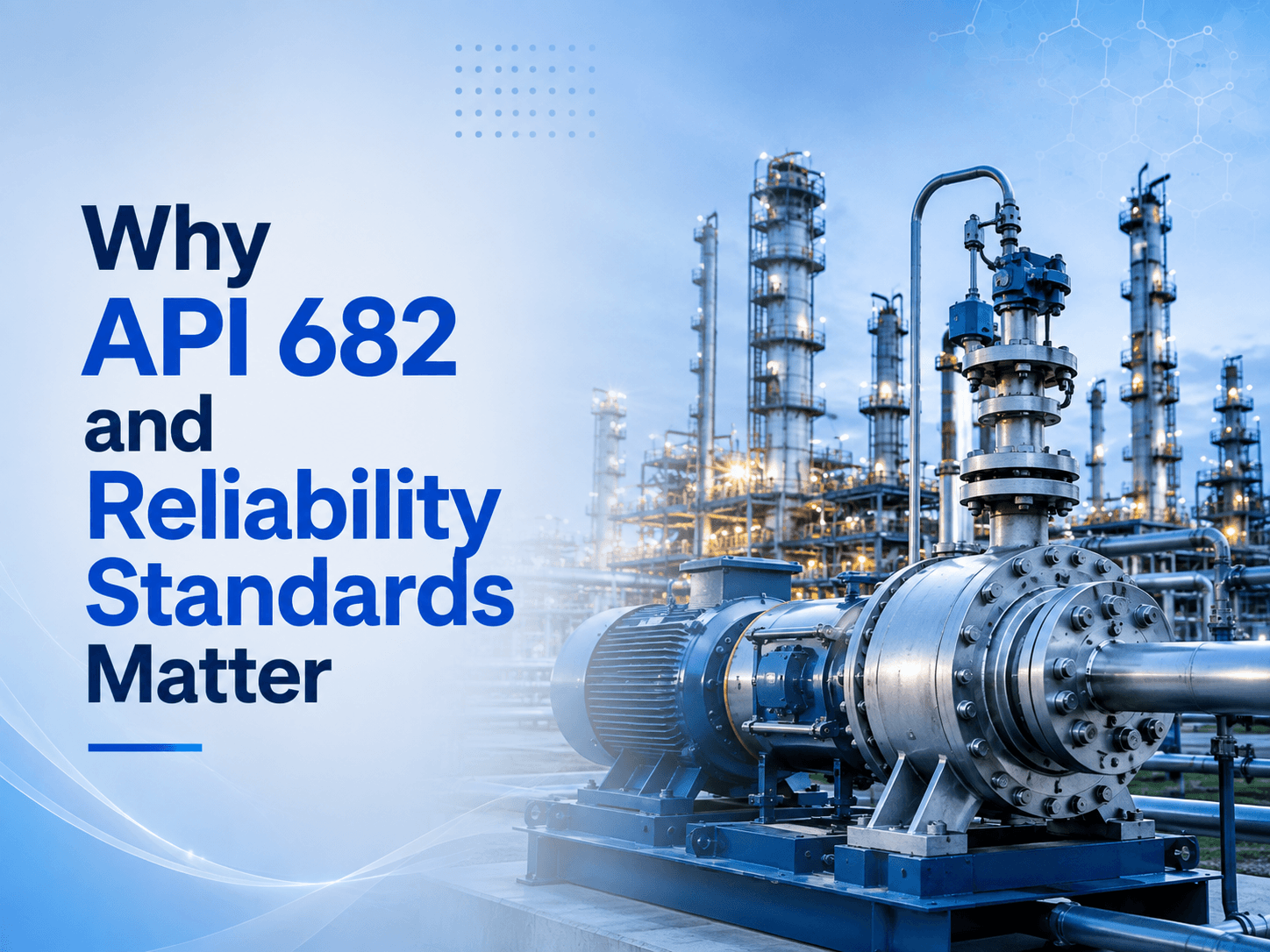
Why API 682 and Reliability Standards Matter

Why API 682 and Reliability Standards Matter

In oil & gas service, a seal failure isn’t just a maintenance event — it’s a potential fugitive emissions release, a fire or toxic exposure risk, and in many facilities a reportable incident under process safety management regulations. That’s the reasoning behind API 682, the industry’s benchmark for shaft sealing systems on centrifugal and rotary pumps: it exists specifically because seal failures in hydrocarbon service carry consequences that go well beyond the cost of the part.

API 682 principles shape seal category selection (by pressure and temperature severity), arrangement (single, dual unpressurized, or dual pressurized), and the auxiliary piping plans that support the seal in service. We design against these principles even on equipment that falls outside API 610’s exact scope, because the underlying reliability logic — categorize by hazard, back up single seals where the failure consequence is high, specify a support system rather than leaving it to chance — holds regardless of pump frame size.

This reliability-first approach matters most on continuous, unmanned, or infrequently inspected equipment, where a seal that leaks slowly for weeks before detection can add up to significant emissions and safety exposure long before it becomes a visible failure.
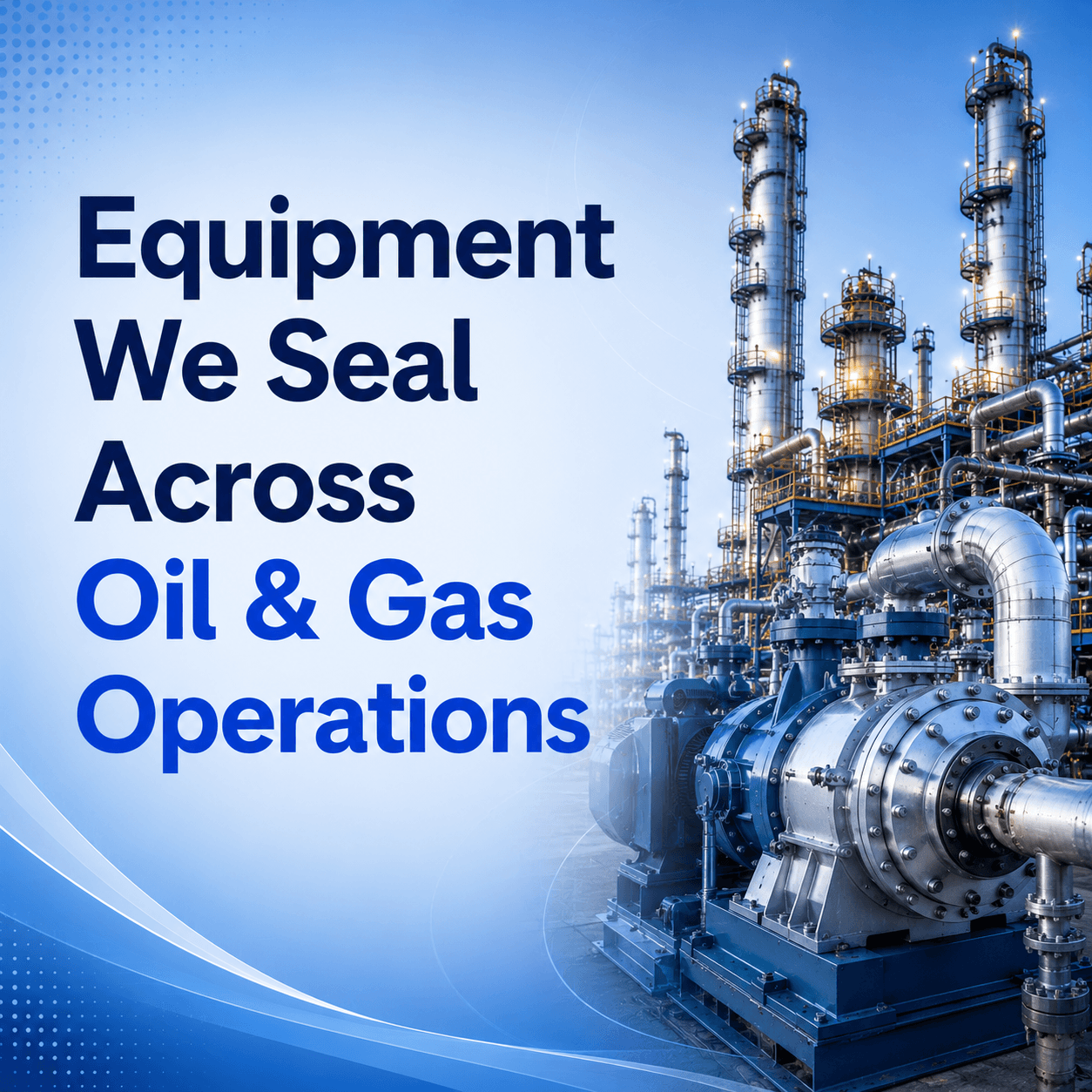
Equipment We Seal Across Oil & Gas Operations

Equipment We Seal Across Oil & Gas Operations

Oil & gas facilities run equipment across three broad segments — upstream extraction, midstream transport, and downstream refining and processing — each with its own sealing demands. We supply seals across this range, engineered to the pressure, temperature, and hazard classification each stage requires:

  • Crude Oil & Produced Water Pumps: Upstream transfer and produced water handling pumps run continuously, often in remote or unmanned locations, where a seal that requires full pump teardown for replacement means extended production loss. Our Split Mechanical Seals install without full shaft removal, cutting both downtime and field labor on these installations.
  • Refinery Process Pumps: Refinery process pumps handling everything from light hydrocarbons to heavy residues need seals that are simple to install correctly in the field and repeatable across a plant’s full pump fleet. Our Cartridge Mechanical Seals are pre-assembled and pre-set, reducing installation error — a leading cause of early seal failure industry-wide.
  • Pipeline Booster & Transfer Stations: Pipeline pumping stations often run unattended for extended periods, so seal reliability and leak containment matter more than almost anywhere else in the value chain. We specify Seal Support Systems — API-plan piping, barrier fluid reservoirs, and instrumentation — sized for the monitoring regime the station actually has.
  • High-Temperature & High-Pressure Services: Hot oil circuits, high-pressure boiler feed applications, and certain refinery process streams exceed the practical limits of elastomer secondary seals. Our Metal Bellow Mechanical Seals remove the dynamic elastomer entirely, holding up under sustained high temperature where O-ring designs would degrade.
    • Compressor auxiliary and lubrication oil systems — seals for the pumps that support rotating compressor trains
    • Sour service (H2S-bearing) crude and gas handling — seal materials selected for sulfide stress cracking resistance
    • Custody transfer and metering skid pumps — zero-leak requirements where fiscal measurement accuracy is at stake
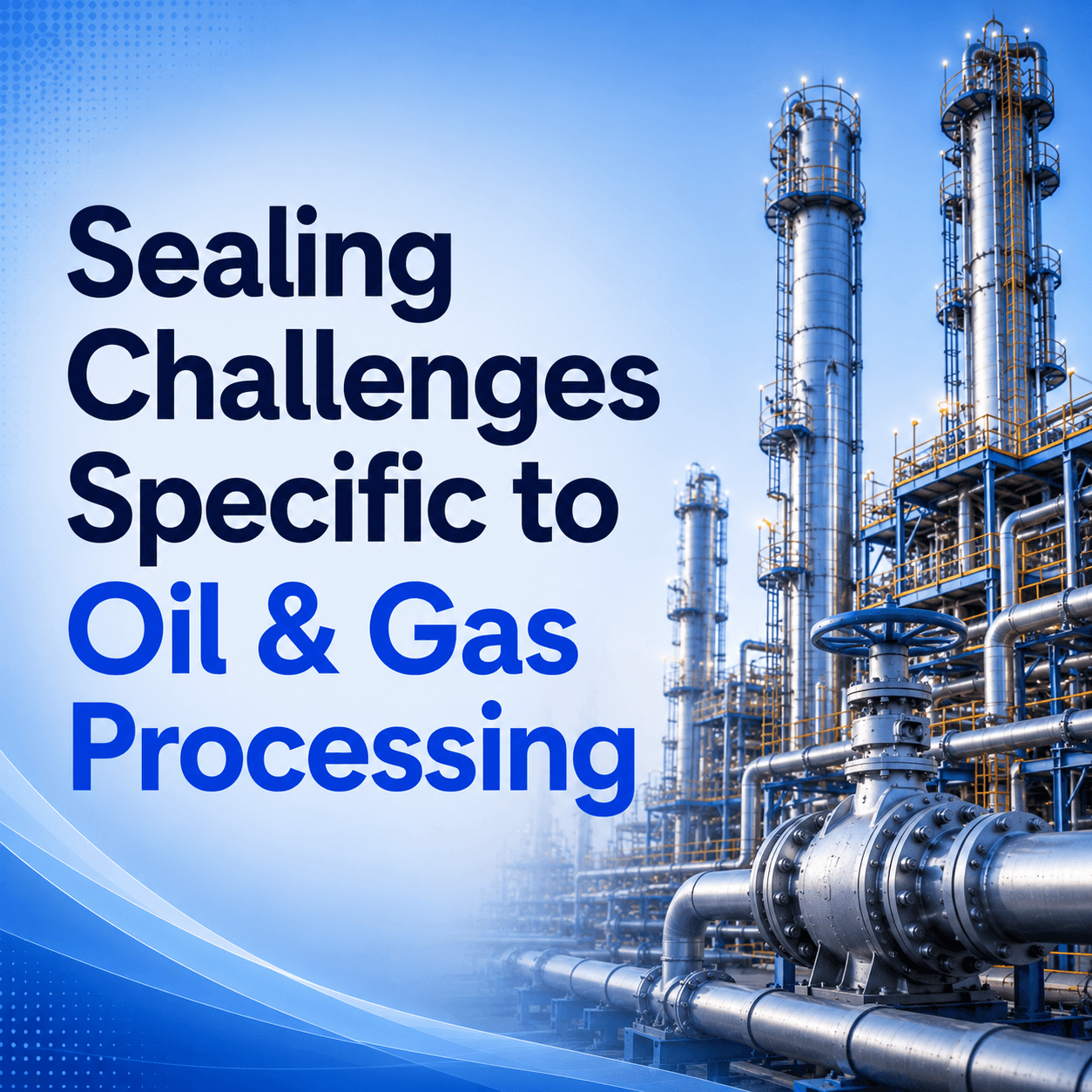
Sealing Challenges Specific to Oil & Gas Processing

Sealing Challenges Specific to Oil & Gas Processing

Hazardous Fluid Containment

  • Zero tolerance for fugitive emissions on VOC and H2S-bearing streams
  • Seal designs rated for flammable, toxic, or explosive atmosphere classifications
  • Dual seal arrangements specified where atmospheric release is unacceptable regardless of cost

Pressure & Temperature Extremes

  • High-pressure boiler feed and water injection services
  • Sustained high-temperature hot oil and hot process circuits
  • Frequent start/stop cycling on standby and backup pump trains

Reliability & Uptime Requirements

  • Remote and unmanned installations where mean-time-between-failure directly drives operating cost
  • Continuous 24/7 duty with limited planned maintenance windows
  • Seal category, arrangement, and qualification expectations consistent with API 682

As in other heavy process industries, these requirements rarely stand alone — a seal for a sour-service crude pump typically has to satisfy hazard containment, pressure and temperature capability, and long-run reliability simultaneously. We treat that as a single specification exercise, not three separate ones.

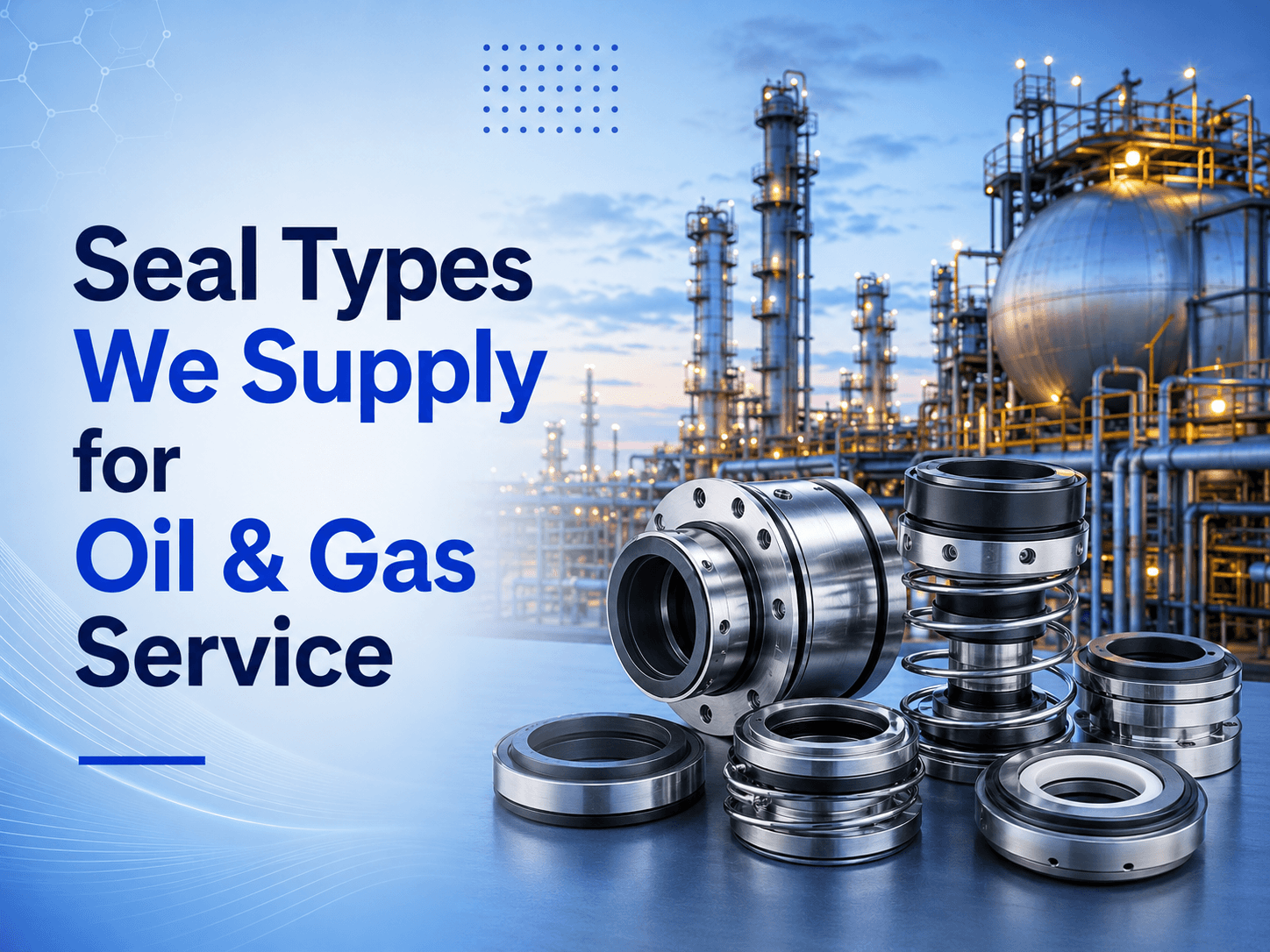
Seal Types We Supply for Oil & Gas Service

Seal Types We Supply for Oil & Gas Service

  • Cartridge Mechanical Seals: Pre-assembled and pre-set for consistent, repeatable field installation across a plant’s pump fleet, reducing the installation-related failures common with component seals fitted under field conditions.
  • Split Mechanical Seals: For large or continuously running pumps where shaft removal for seal replacement means significant production loss, split designs install without full disassembly of the pump or driver.
  • Metal Bellow Mechanical Seals: Where sustained high temperatures exceed elastomer limits — hot oil systems, certain refinery streams — metal bellow designs eliminate the dynamic elastomer and extend service life between replacements.
  • Multi Spring Mechanical Seals: Multiple smaller springs distribute closing force more evenly and resist clogging from solids in produced water and other contaminated media, common in upstream and dirty-service applications.
  • Seal Support Systems: API piping plans, barrier and buffer fluid systems, and seal pots engineered around your actual instrumentation and monitoring capability, not sold as a generic add-on.
  • Standard / Component Seals: For utility and non-critical pump duty where a full cartridge or split design isn’t warranted, sized to your existing seal chamber dimensions.
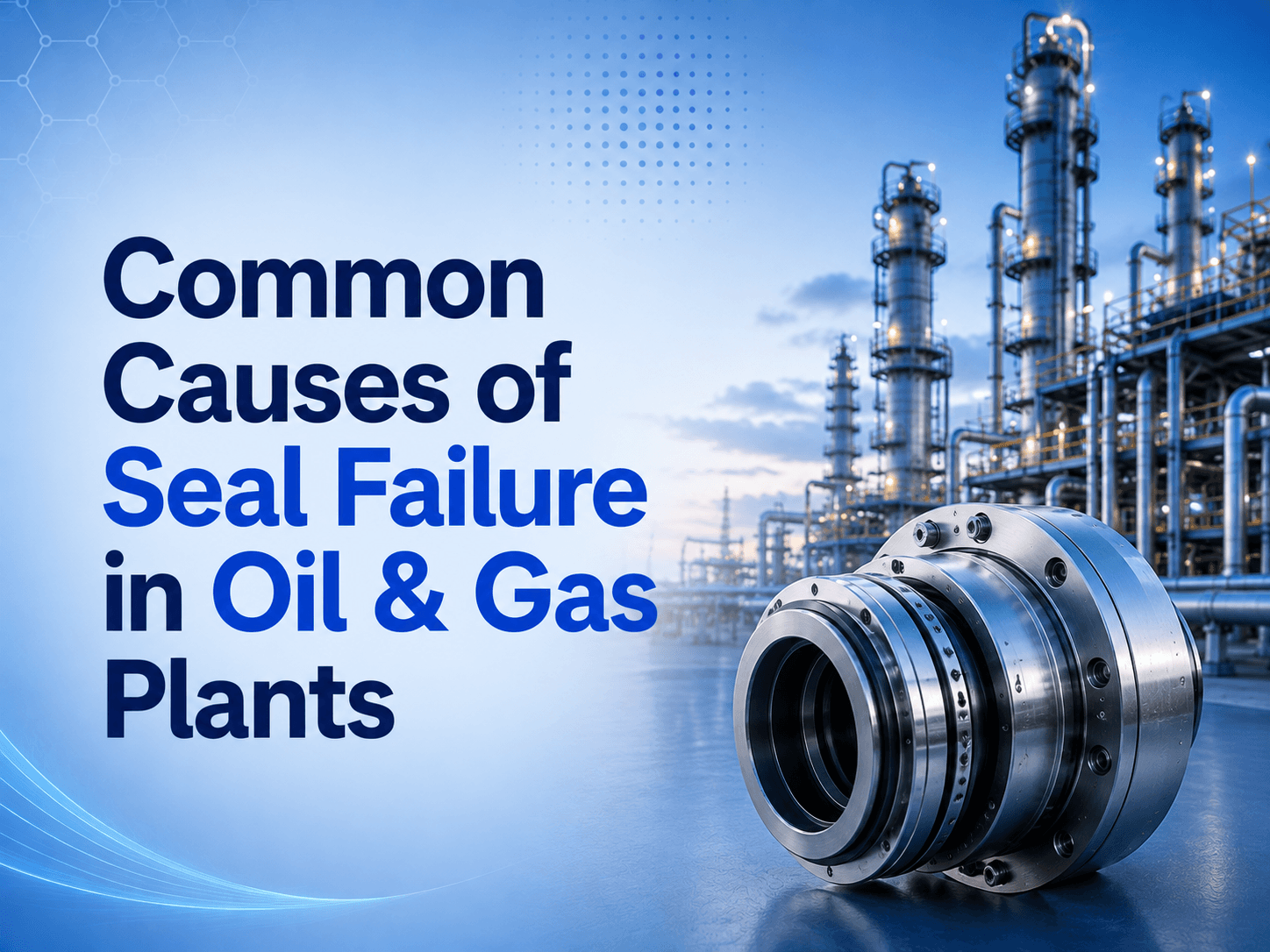
Common Causes of Seal Failure in Oil & Gas Plants — and How We Design Around Them

Common Causes of Seal Failure in Oil & Gas Plants — and How We Design Around Them

  • Dry running on gas-locked or vapor-locked suction conditions — addressed through support system and flush plan design matched to actual suction behavior
  • Solids and sand ingress from produced fluids — addressed with multi-spring designs and abrasion-resistant face combinations that resist clogging and premature wear
  • Elastomer swell or degradation from aromatic hydrocarbon exposure — addressed through chemical-resistant secondary seal selection or elastomer-free metal bellow designs where the media demands it
  • Seal chamber pressure spikes during pipeline surge events — addressed through seal category and arrangement selection consistent with API 682 severity classification
  • Thermal shock during hot oil system startup — addressed through face material selection and clearance design suited to rapid temperature swings
Our Engineering & Support Process

Our Engineering & Support Process

  • Process and hazard review — fluid composition, pressure, temperature, and area classification
  • Seal category and arrangement recommendation consistent with API 682 principles
  • Material selection for chemical compatibility and hazardous service
  • Drawing approval before manufacturing begins — including fully custom-engineered designs for non-standard or imported pumps
  • In-house manufacturing and quality testing with material traceability documentation
  • Installation guidance and, where required, on-site commissioning support for remote or field locations
Why Oil & Gas Operators Choose Leak-Pack

Why Oil & Gas Operators Choose Leak-Pack

  • Seals engineered to API 682 principles for centrifugal and rotary pump sealing
  • Split and cartridge designs that cut field installation error and unplanned downtime
  • Metal bellow and multi-spring options built for high-temperature and dirty-media service
  • Seal support systems sized to your actual monitoring and inspection regime, not oversold
  • Fast turnaround for replacement seals during unplanned outages
  • Direct engineering support — not just a catalogue sale

Material Selection Guide

Below is a general guide to the materials we typically recommend by oil & gas application. Final material selection is always confirmed against your specific process fluid, pressure and temperature conditions, and hazardous area classification.


ApplicationSeal Face CombinationSecondary Seal / ElastomerWetted Metallurgy
Crude oil transfer (general)Silicon Carbide vs. CarbonFKM (Viton)316 Stainless Steel
Sour / H2S serviceSilicon Carbide vs. Silicon CarbideFFKM (Kalrez-type)Duplex / 316 SS
High-temp hot oil / processSilicon Carbide vs. Silicon CarbidePTFE / Metal bellow (no elastomer)316 SS / Hastelloy
Produced water (with solids)Tungsten Carbide vs. Silicon CarbideEPDM / FKM316 SS / Duplex
Pipeline booster (hydrocarbon)Silicon Carbide vs. CarbonFKM (Viton)316 Stainless Steel

Frequently Asked Questions

We design and engineer our oil & gas seals to API 682 principles — category selection, arrangement, and auxiliary piping plans — for centrifugal and rotary pump applications. Share your pump data sheet and service conditions and we’ll confirm the specific classification for your application.

Yes. We select seal face, secondary seal, and metallurgy combinations for sulfide stress cracking resistance and general sour-service compatibility, based on your specific fluid composition and partial pressure.

Yes. We engineer complete seal support systems — barrier and buffer fluid reservoirs, seal pots, and instrumentation — sized to your process conditions and monitoring capability, not sold as a generic bolt-on.

Yes. Our cartridge and split seal designs are engineered for retrofit onto most existing centrifugal and rotary pumps, including as upgrades from older packing or single-seal arrangements.

Our metal bellow designs are built for sustained high-temperature hot oil and process service where standard elastomer secondary seals would degrade — share your operating temperature and we’ll confirm the right design and materials.

Yes, including seal support systems sized for unattended or infrequently inspected station operation, where reliability and leak containment are the primary design drivers.

Lead times depend on seal size, arrangement, and material availability. For standard cartridge and split seal replacements, we prioritize fast turnaround to minimize production loss — share your seal drawing or pump details with our team for a firm timeline.

Yes. We specify multi-spring designs and abrasion-resistant face combinations for produced water and other solids-bearing media, where clogging and abrasive wear are the primary failure modes for standard seals.

Talk to Our Sealing Engineers

Every oil & gas application runs a different combination of fluid composition, pressure, temperature, and hazard classification, which is why we don’t work off a fixed catalogue selection for this industry — every seal we quote starts with your actual process conditions and reliability requirements. We’re happy to work alongside your reliability and process safety teams where a seal specification needs to support broader API 682 compliance documentation.

Send us your pump or compressor auxiliary specifications — fluid composition, operating pressure and temperature, and hazardous area classification — and our engineering team will recommend the right seal solution for your application. Explore our full range of mechanical seals by industry or send an enquiry directly.