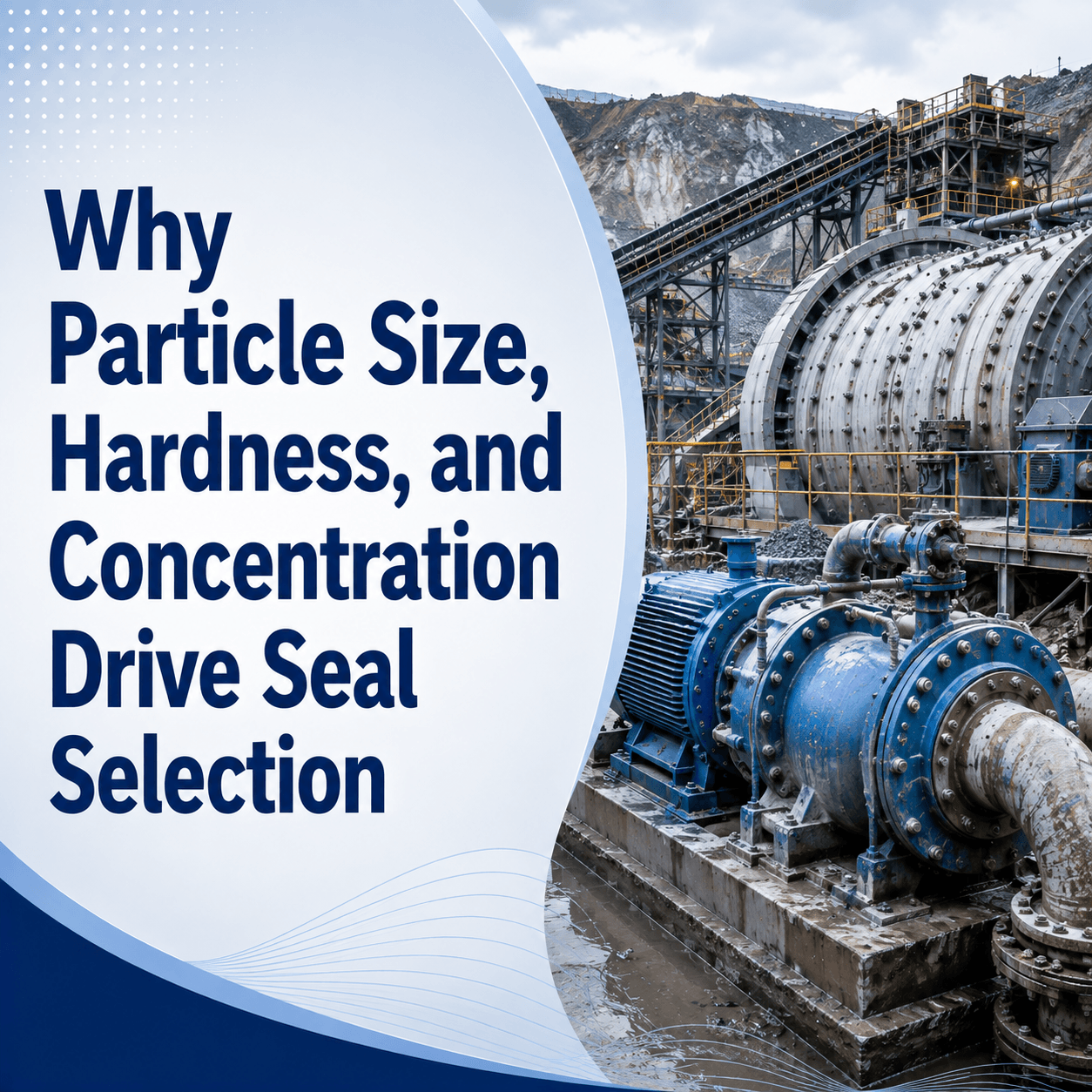
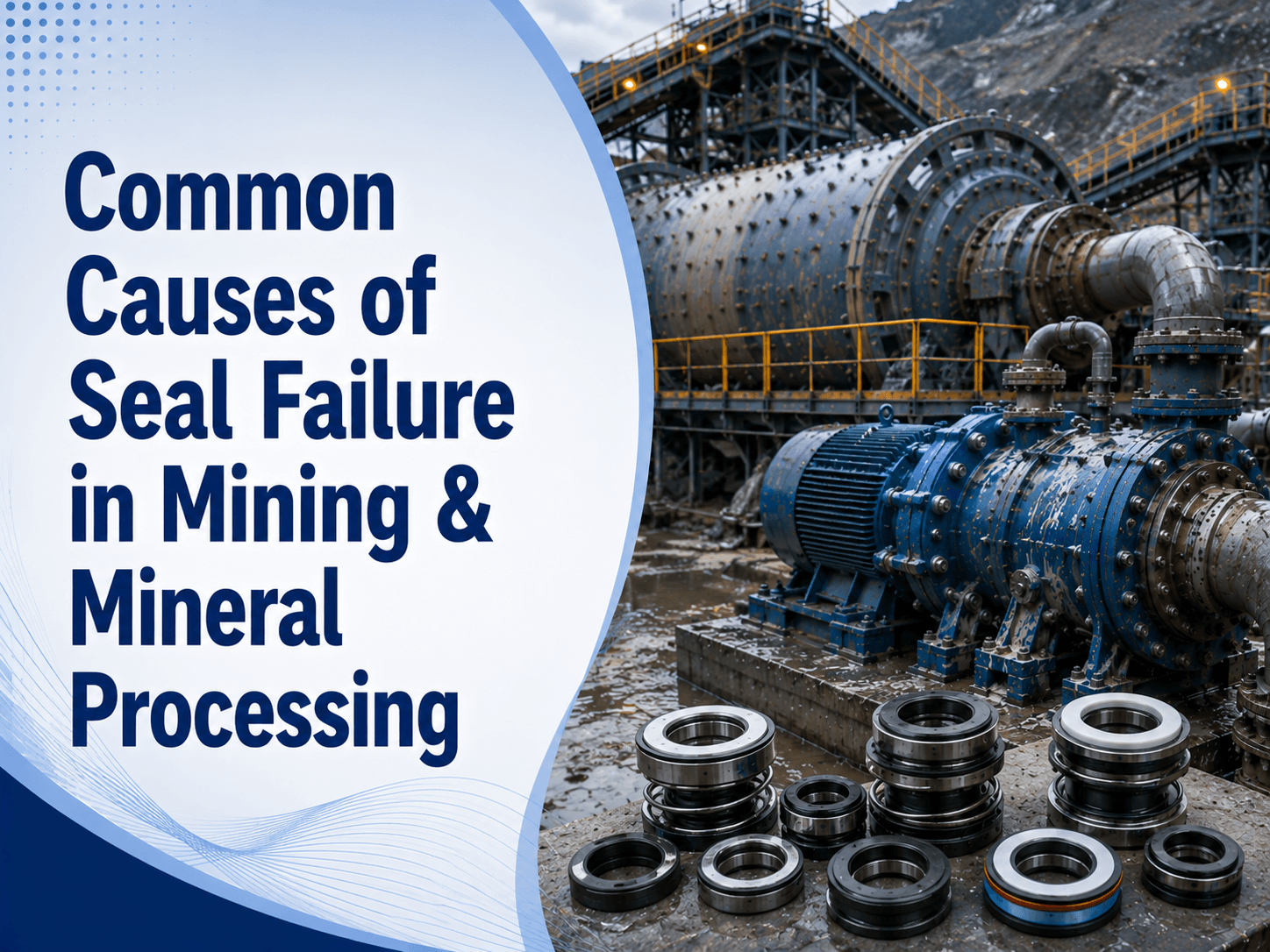
Mining and mineral processing operations pump some of the most punishing media in industrial service — ore slurries loaded with hard, angular mineral particles that erode standard seal faces in a fraction of the time a clean fluid would allow. From comminution circuits through flotation, leaching, and tailings disposal, nearly every stage of the process involves a high-solids stream, and the mechanical seal on that equipment is usually the single component most exposed to that abrasive load. A seal specified without full regard for particle size, hardness, and concentration is one of the most common and most expensive maintenance items on a mine site.
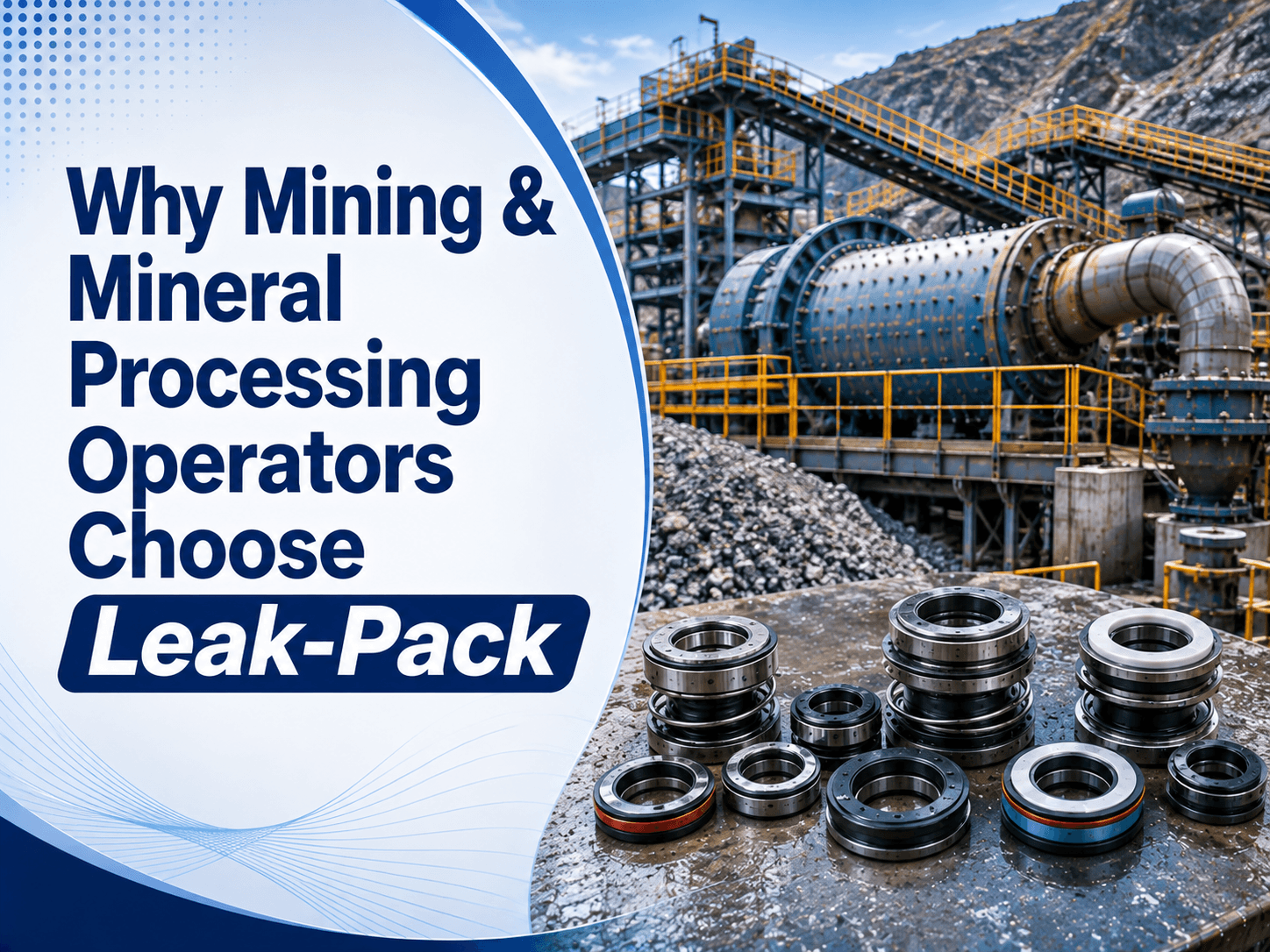
At Leak-Pack Engineering, we design and manufacture mechanical seals for mining and mineral processing equipment — slurry pumps, thickener and dewatering systems, flotation cells, and leach circuit pumps — engineered for abrasion resistance and long service life on high-solids media. Our engineering team works from your actual slurry characteristics, including any tailings management considerations consistent with the Global Industry Standard on Tailings Management, to recommend the right seal face materials, arrangement, and support system.

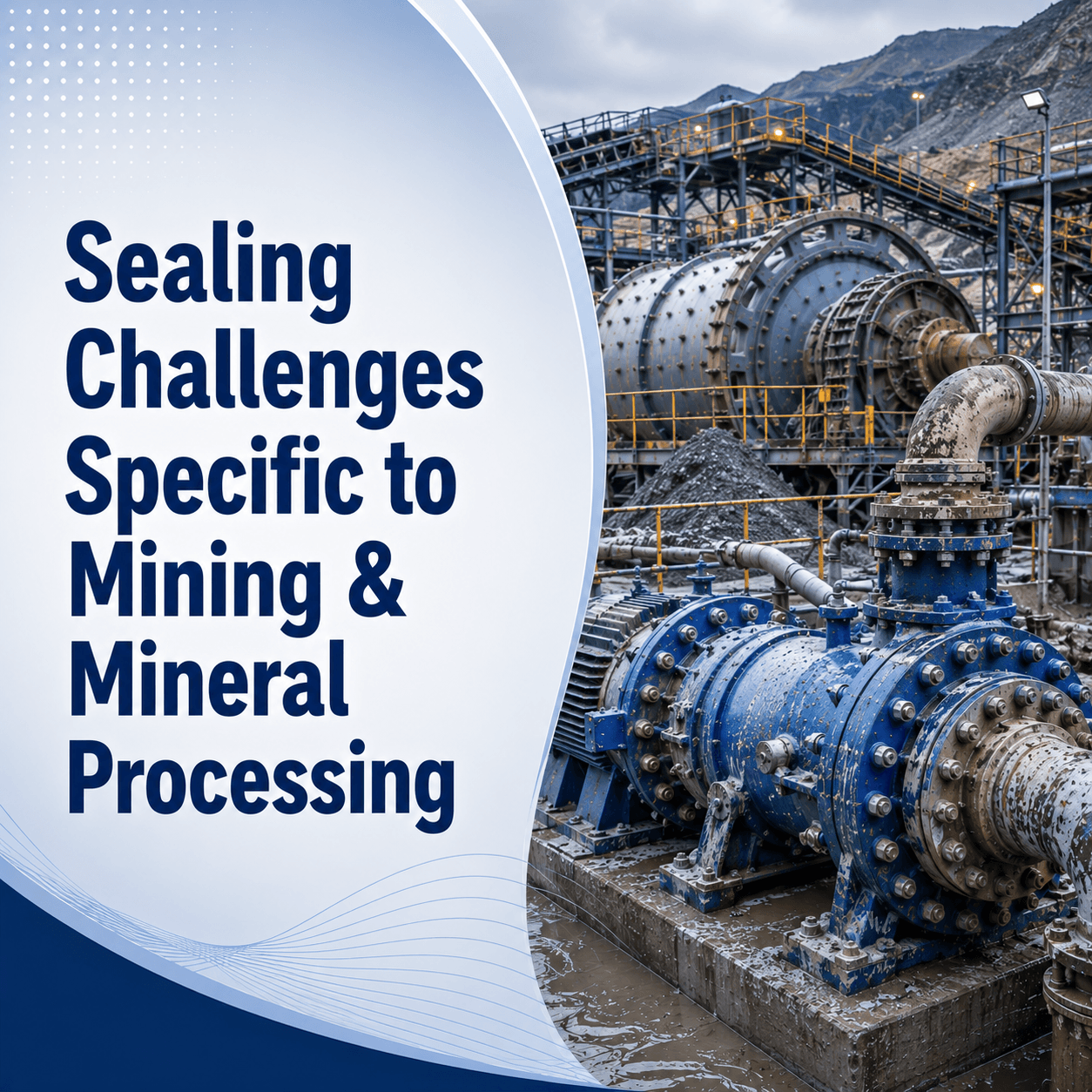
In mining and mineral processing, seal selection starts with a question most other industries don’t have to ask in the same way: what exactly is suspended in this stream, and how hard is it? Ore slurries vary enormously in particle size distribution, mineral hardness, and solids concentration across the same process circuit — a comminution discharge stream carries far coarser, harder particles than a flotation tailings stream, even though both are technically “slurry.” A seal specified generically for “slurry duty” without matching face hardness and support system design to the actual particle profile will wear at a rate the mine’s maintenance budget didn’t anticipate.
This is also where broader industry standards intersect with equipment selection. Mining operations increasingly report against sustainability and safety frameworks maintained by bodies such as ICMM, particularly around tailings facility management following well-publicized industry failures — which puts additional scrutiny on the reliability of pumps and seals in the tailings handling chain, not just the disposal facility itself. A seal failure on a tailings transfer pump isn’t purely a maintenance event when it sits inside a system under this level of external attention.
Getting this wrong compounds quickly on a mine site: a seal replaced every few weeks on a high-abrasion slurry duty often gets treated as an unavoidable cost of the application, when in most cases a face material and support system genuinely matched to the actual particle hardness and concentration would extend that interval several times over.
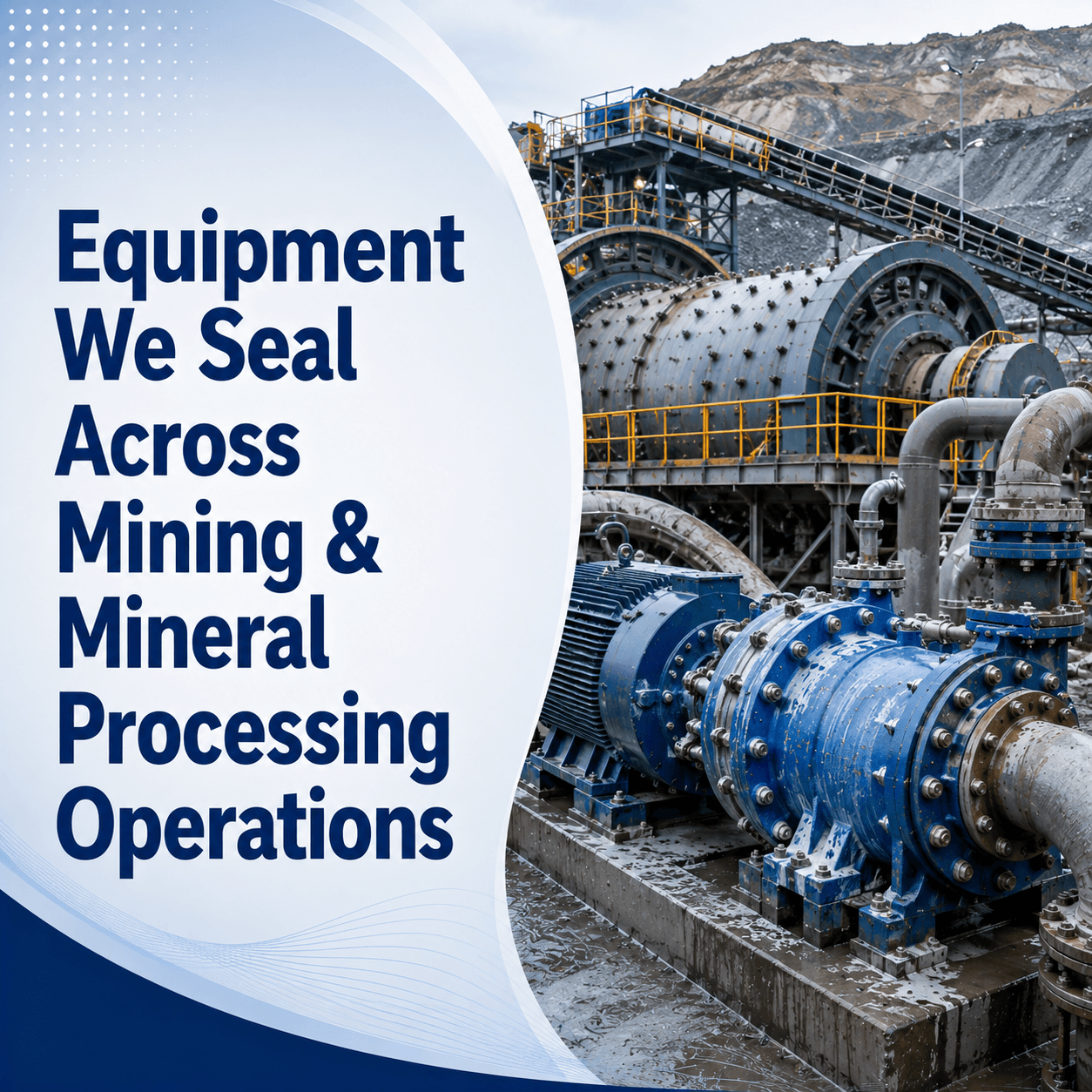
Mine sites and processing plants run equipment from the comminution circuit through to final tailings disposal, each stage presenting a different slurry profile. We supply seals across this full range:

As in other heavy-duty industries, these requirements rarely stand alone — a leach circuit seal typically has to resist abrasive wear, survive aggressive chemical exposure, and deliver predictable service life at a remote site simultaneously. We size the specification to all three together, not just the abrasion problem in isolation.


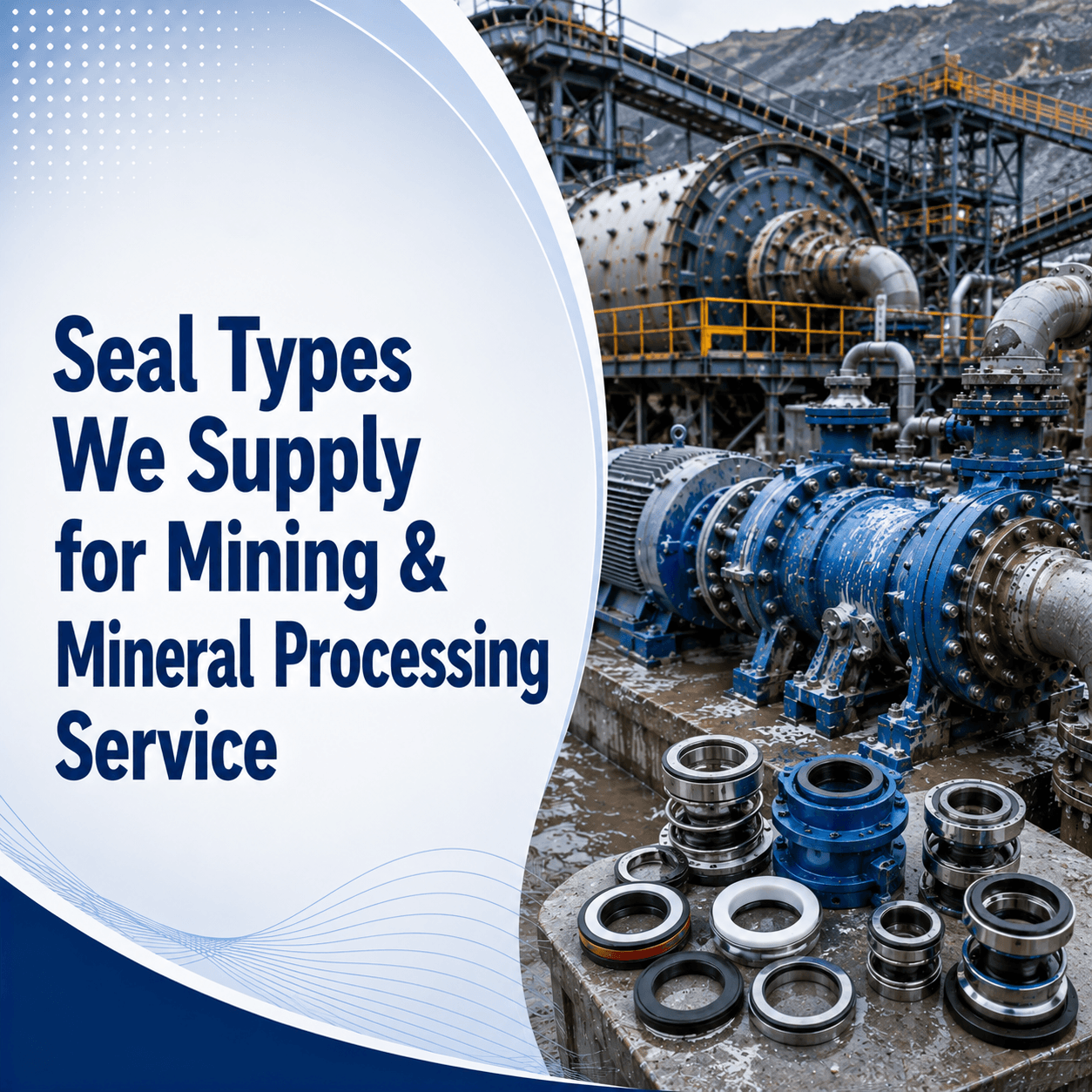
Below is a general guide to the materials we typically recommend by mining and mineral processing application. Final material selection is always confirmed against your specific particle size distribution, mineral hardness, solids concentration, and any chemical exposure present.
| Application | Seal Face Combination | Secondary Seal / Elastomer | Wetted Metallurgy |
|---|---|---|---|
| Tailings & general slurry transfer | Tungsten Carbide vs. Tungsten Carbide | EPDM / FKM | 316 SS / Duplex |
| High-abrasion ore slurry (comminution) | Reaction-Bonded SiC vs. SiC | FKM (Viton) | Duplex / Super Duplex |
| Flotation & reagent circuits | Silicon Carbide vs. Silicon Carbide | FFKM (Kalrez-type) | 316 SS / Hastelloy |
| Acid leach (heap/tank leaching) | Silicon Carbide vs. Silicon Carbide | PTFE / FFKM | Alloy 20 / Hastelloy |
| Dewatering & thickener underflow | Tungsten Carbide vs. Silicon Carbide | EPDM / FKM | 316 SS / Duplex |
Yes. We specify hard-face combinations — typically tungsten carbide or reaction-bonded silicon carbide — sized to your actual particle hardness and concentration, rather than a generic “slurry duty” default.
Yes. Our split seal designs are well suited to large, continuously running thickener and tailings pumps, installing without full shaft removal to fit limited maintenance windows.
Yes. We specify elastomer-free PTFE bellow designs paired with abrasion-resistant faces for leach circuits combining chemical attack with abrasive solids content.
We review your actual slurry characterization data — particle size distribution, mineral hardness, and solids concentration — by process stage, since a seal specified for one point in the circuit often won’t perform the same at another.
Yes. Our cartridge and multi-spring seal designs are engineered for retrofit onto most existing mining and mineral processing pumps, including as upgrades from seals wearing out faster than expected under the actual particle load.
Yes. We engineer flush and barrier fluid support systems sized to your specific process, avoiding the dilution issues that come with a generic, oversized flush rate.
Lead times depend on seal size, material, and site logistics. We prioritize fast turnaround on mining replacement seals given how quickly remote-site downtime compounds — share your seal drawing or pump details with our team for a firm timeline.
Yes. We offer fully custom-engineered seal designs for legacy or non-standard pump configurations common on older mine sites and processing plants.
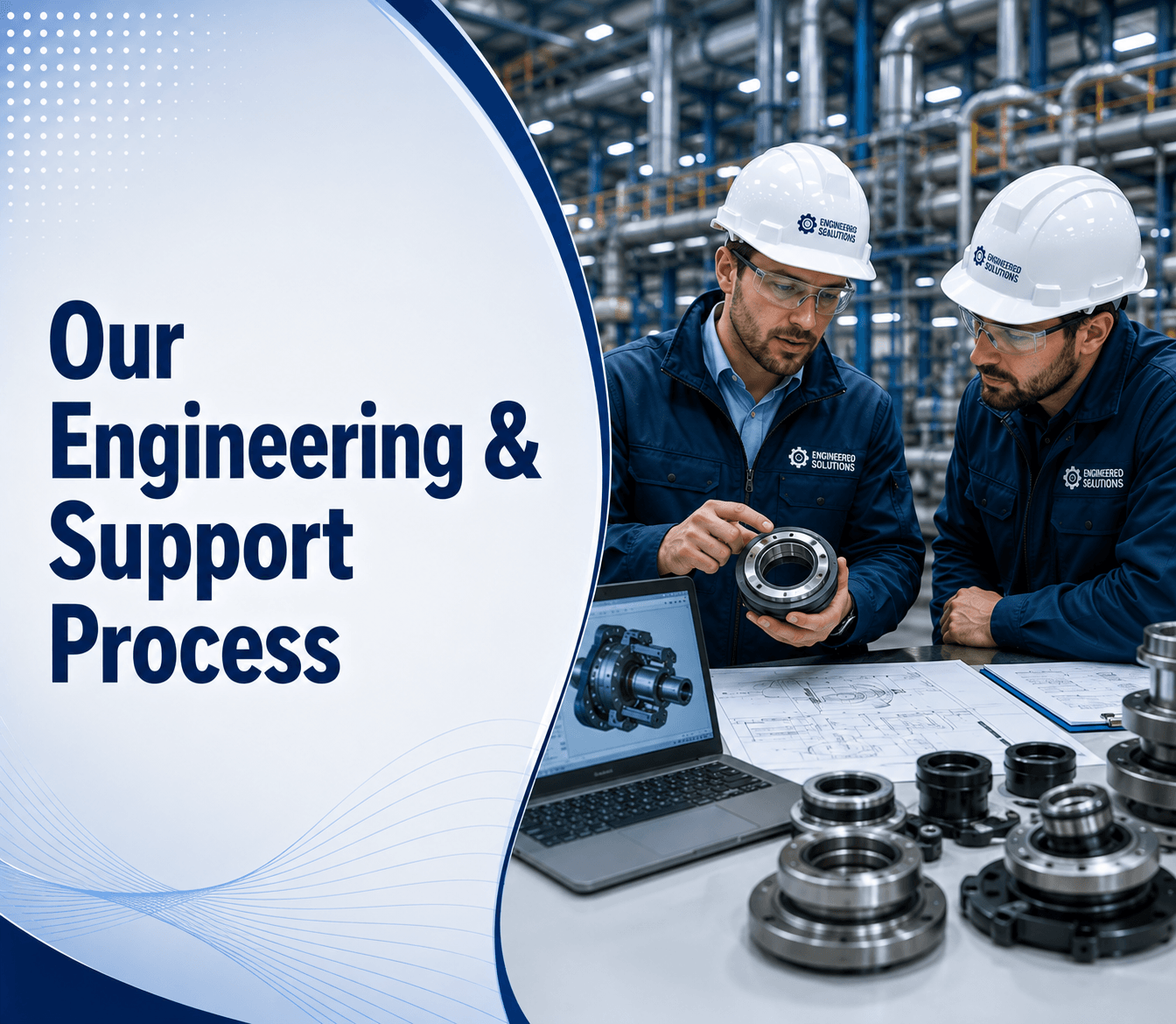
Every mine site and processing circuit runs a different combination of particle size, hardness, concentration, and chemical exposure, which is why we don’t work off a fixed catalogue selection for this industry — every seal we quote starts with your actual slurry characterization data. We’re happy to work alongside your plant maintenance and reliability teams to review seal specifications across an entire pump fleet, not just a single problem pump.
Send us your pump specifications — particle size, mineral hardness, solids concentration, and chemical exposure — and our engineering team will recommend the right seal solution for your application. Explore our full range of mechanical seals by industry or send an enquiry directly.