Marine & Shipping Industry

Mechanical Seals for the Marine & Shipping Industry

Marine and shipboard pumping equipment operates in one of the least forgiving environments in industry — constant seawater exposure, vibration from the vessel’s own machinery and sea state, and long stretches at sea where a failed seal can’t simply be swapped from a nearby stores shelf. Seawater cooling pumps, bilge and ballast systems, fuel oil transfer pumps, and cargo pumps on tankers all depend on seals that combine corrosion resistance with genuine mechanical robustness, because a seal failure mid-voyage is a very different problem than the same failure at a shore-based plant with a spares store down the corridor.

At Leak-Pack Engineering, we design and manufacture mechanical seals for marine and shipboard equipment — seawater cooling systems, bilge and oily water separator pumps, ballast systems, fuel oil transfer pumps, and cargo pumps — engineered for the corrosion resistance, vibration tolerance, and long service intervals this environment demands. Our engineering team works from your vessel’s actual operating profile and, where relevant, classification society requirements, to recommend seal designs suited to extended periods between port calls and scheduled maintenance.

Why Corrosion Resistance and Voyage-Length Reliability Drive Seal Selection

Why Corrosion Resistance and Voyage-Length Reliability Drive Seal Selection

In marine service, seal selection carries a constraint most shore-based industries don’t face in the same way: the seal has to survive not just the design life of the application, but the length of the voyage or maintenance interval between opportunities to service it. A seal that would be an acceptable maintenance item on a land-based pump with parts on a nearby shelf becomes a genuine operational risk on a vessel weeks from the nearest port with the right spare. This pushes marine seal specification toward maximum reliability and corrosion-resistant metallurgy as a starting point, not an upgrade option.

Seawater itself is also a more aggressive medium than fresh water in ways that catch out seals specified without marine service specifically in mind — chloride-driven corrosion and pitting attack standard stainless steel components faster than most shore-based applications would ever see, which is why duplex and super duplex stainless steels, not standard 316, are the typical baseline for seawater-wetted seal metallurgy. Combined with the vibration a seal experiences from the vessel’s own machinery and sea motion, corrosion resistance alone isn’t sufficient — the seal’s mechanical design has to tolerate dynamic loading that a stationary shore installation never sees.

This is also an area where regulatory and pollution-prevention exposure enters seal selection directly. Bilge and oily water separator pump seals sit inside a system governed by MARPOL, the international convention preventing pollution from ships — a leaking seal in this system isn’t just a maintenance issue, it’s a potential discharge compliance failure with direct regulatory consequences for the vessel.

 

Equipment We Seal Across Marine & Shipping Operations

Equipment We Seal Across Marine & Shipping Operations

Vessels run pumping equipment across propulsion support, ballast, cargo, and pollution prevention systems, each with its own corrosion and reliability demands. We supply seals across this full range:

  • Seawater Cooling & Ballast Systems: Main engine and auxiliary seawater cooling pumps run continuously throughout a voyage, demanding corrosion-resistant metallurgy and vibration-tolerant design. Our Cartridge Mechanical Seals provide consistent, repeatable installation across a vessel’s seawater and ballast pump fleet.
  • Bilge & Oily Water Separator Pumps: Bilge system pumps handle mixed water, oil, and debris in a system with direct MARPOL discharge implications, favoring designs that resist fouling while maintaining a reliable seal. Our Multi Spring Mechanical Seals resist clogging in this mixed-media service.
  • Fuel Oil Transfer Pumps: Fuel oil handling, particularly with heavy fuel oil or blended fuels, needs seals matched to fuel viscosity and temperature. We fit Standard / Component Seals or cartridge designs depending on the pump configuration and duty.
  • Cargo Pumps (Tankers): Tanker cargo pumps handle a wide range of liquid cargoes, from crude oil to chemical products, each with its own compatibility requirements. Where cargo chemistry is aggressive, we specify PTFE / Teflon Bellow Mechanical Seals for elastomer-free, broad chemical compatibility.
    • Sewage and wastewater treatment plant pumps — seals for onboard sewage treatment systems governed by MARPOL Annex IV
    • Fire and general service pumps — seals for critical safety-related pumping systems requiring maximum reliability
    • Hydraulic and lubrication oil auxiliary pumps — seals supporting deck machinery and engine room auxiliary systems
Sealing Challenges Specific to Marine & Shipping Operations

Sealing Challenges Specific to Marine & Shipping Operations

Seawater Corrosion

  • Chloride-driven pitting and crevice corrosion attacking standard stainless steel metallurgy
  • Galvanic corrosion risk where dissimilar metals are in contact in a seawater environment
  • Biofouling in seawater systems that can affect seal chamber conditions over extended periods

Voyage-Length Reliability

  • Extended periods at sea between opportunities for seal service or replacement
  • Limited onboard spares inventory compared to a shore-based facility
  • Vibration and dynamic loading from vessel machinery and sea state that shore installations don’t experience

Regulatory & Pollution Prevention Exposure

  • Bilge and sewage system compliance tied to MARPOL discharge regulations
  • Classification society survey requirements for critical shipboard machinery
  • Documentation and traceability expectations for equipment on classed vessels

As in other demanding industries, these requirements rarely stand alone — a bilge pump seal typically has to resist seawater corrosion, survive weeks or months without service, and support the vessel’s MARPOL compliance simultaneously. We size the specification to all three together.

Seal Types We Supply for Marine & Shipping Service

Seal Types We Supply for Marine & Shipping Service

  • Cartridge Mechanical Seals: Pre-assembled and pre-set for consistent, repeatable installation across a vessel’s seawater cooling and ballast pump fleet, reducing installation error during limited port-call maintenance windows.
  • Multi Spring Mechanical Seals: Resist clogging and fouling in bilge and oily water separator systems handling mixed water, oil, and debris.
  • PTFE / Teflon Bellow Mechanical Seals: Elastomer-free design for tanker cargo pumps handling chemically aggressive or varied liquid cargoes.
  • Split Mechanical Seals: For large seawater or ballast pumps where shaft removal for seal replacement isn’t practical within a limited port-call window.
  • Standard / Component Seals: For fuel oil transfer and auxiliary pump duty where a full cartridge design isn’t warranted.
  • Seal Support Systems: Barrier fluid systems for critical pumps where any product contact with atmosphere carries a safety or environmental consequence.
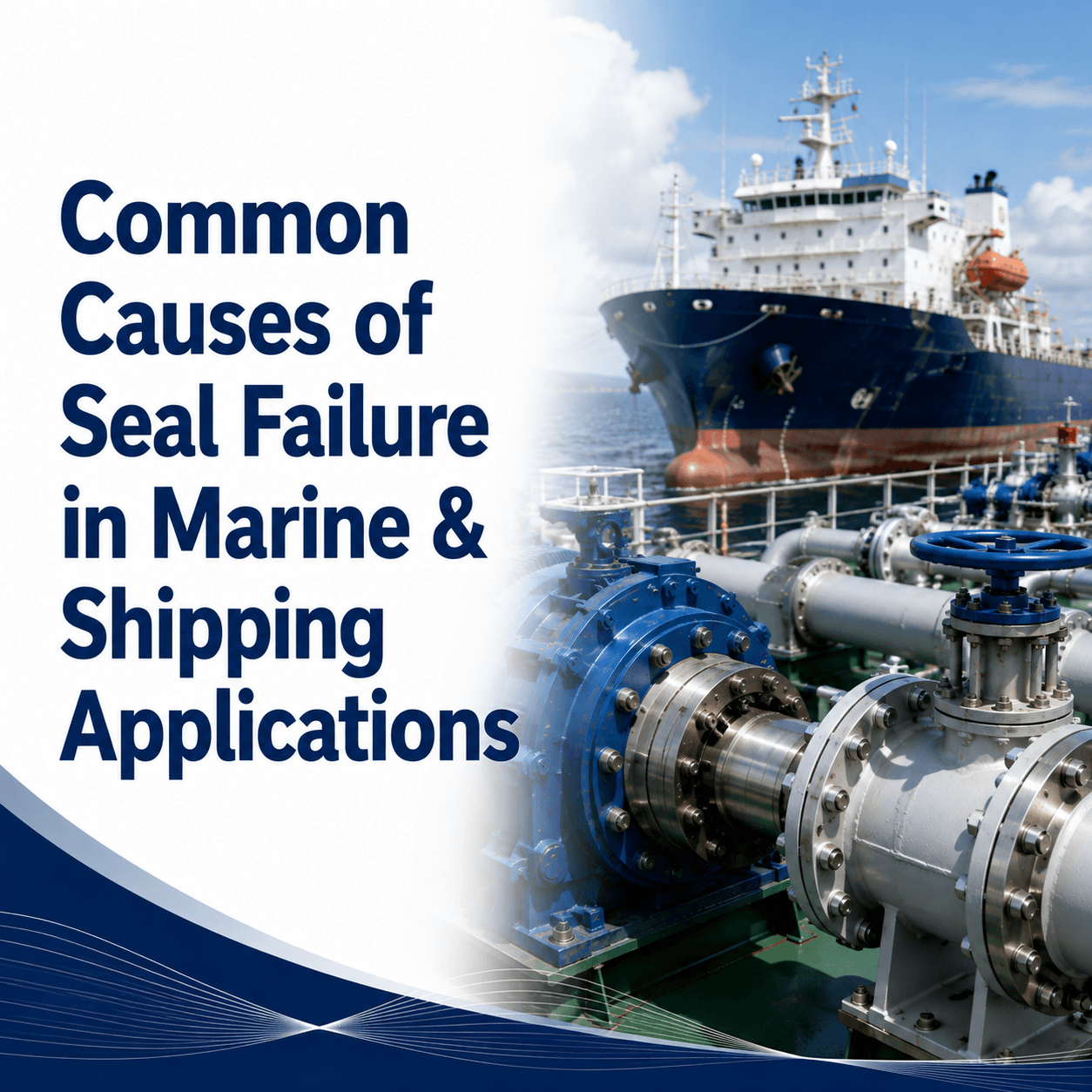
Common Causes of Seal Failure in Marine & Shipping Applications — and How We Design Around Them

Common Causes of Seal Failure in Marine & Shipping Applications — and How We Design Around Them

  • Chloride pitting on standard 316 stainless components — addressed by specifying duplex or super duplex stainless metallurgy for seawater-wetted parts
  • Fouling from bilge system debris and oil — addressed with multi-spring designs that resist clogging in mixed-media service
  • Seal failure from vessel vibration and dynamic loading — addressed through mechanical design and mounting tolerant of the dynamic loads a stationary shore installation never experiences
  • Cargo chemical incompatibility on tanker pumps — addressed through elastomer-free PTFE bellow designs suited to a broad range of cargo chemistries
  • Seal replacement forced to wait for the next port call — addressed by specifying toward maximum reliability and longer service intervals from the outset, rather than accepting a shore-standard replacement cycle
Our Engineering & Support Process

Our Engineering & Support Process

  • Operating profile review — voyage length, seawater exposure, vibration environment, and applicable classification requirements
  • Seal arrangement recommendation based on reliability requirement and access constraints
  • Metallurgy selection for seawater corrosion resistance, typically duplex or super duplex stainless
  • Drawing approval before manufacturing begins — including fully custom-engineered designs for non-standard or retrofit shipboard equipment
  • In-house manufacturing and quality testing with material traceability documentation
  • Installation guidance and, where required, on-site commissioning support timed to port-call windows
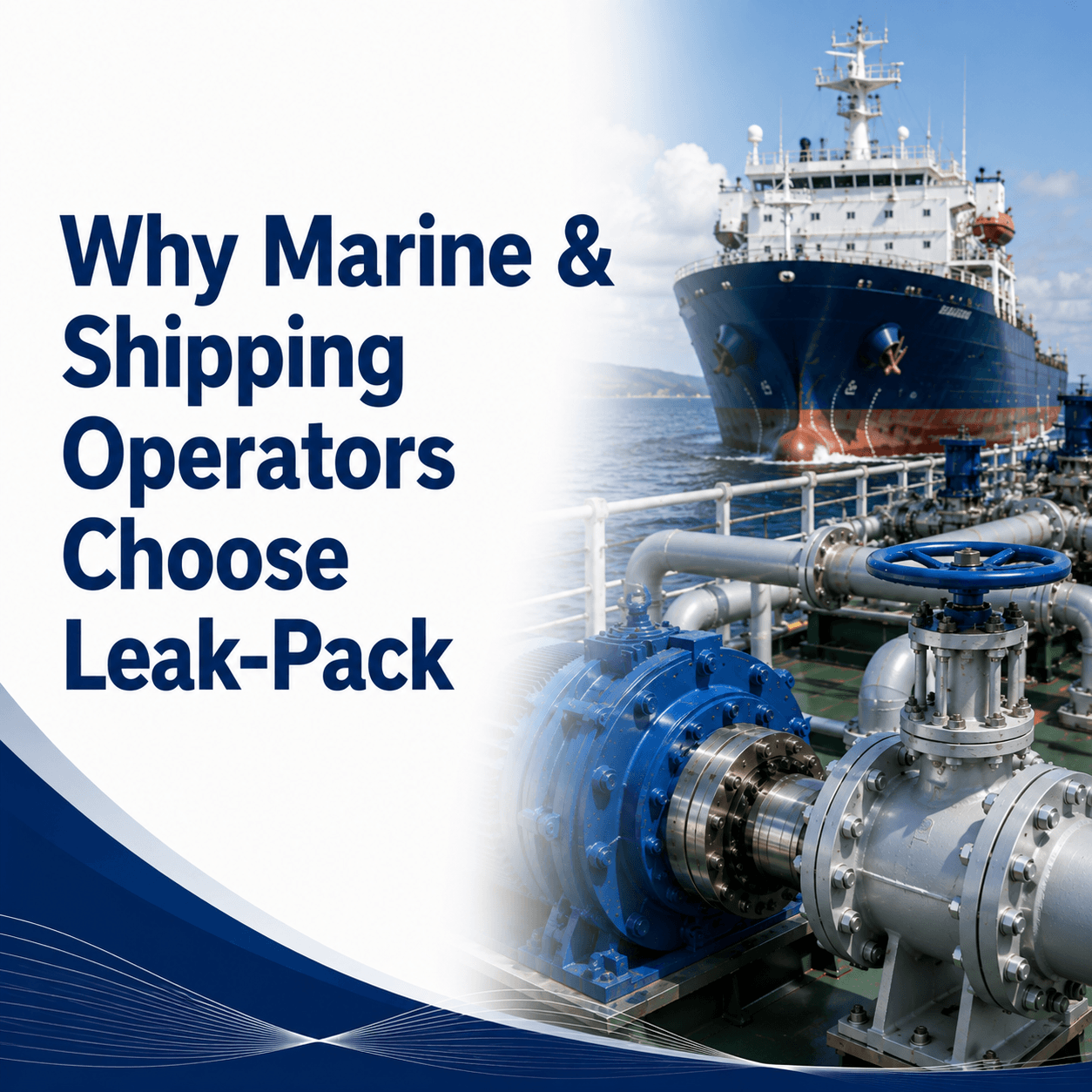
Why Marine & Shipping Operators Choose Leak-Pack

Why Marine & Shipping Operators Choose Leak-Pack

  • Seals specified for corrosion resistance and voyage-length reliability from the outset, not shore-standard service intervals
  • Duplex and super duplex metallurgy options for seawater-wetted service
  • Multi-spring and elastomer-free designs for bilge, cargo, and mixed-media systems
  • Material traceability documentation to support classification society survey requirements
  • Fast turnaround for replacement seals to fit limited port-call maintenance windows
  • Direct engineering support — not just a catalogue sale

Material Selection Guide

Below is a general guide to the materials we typically recommend by marine and shipping application. Final material selection is always confirmed against your specific vessel type, service water chemistry, and voyage profile.

ApplicationSeal Face CombinationSecondary Seal / ElastomerWetted Metallurgy
Seawater cooling & ballast pumpsSilicon Carbide vs. Silicon CarbideFKM (Viton)Duplex / Super Duplex
Bilge & oily water separator pumpsSilicon Carbide vs. CarbonNBR / FKM316 Stainless Steel
Fuel oil transfer pumpsSilicon Carbide vs. Silicon CarbideFKM (Viton)316 SS / Duplex
Cargo pumps (tankers)Silicon Carbide vs. Silicon CarbideFFKM (Kalrez-type)316 SS / Duplex
Sewage & wastewater treatment pumpsTungsten Carbide vs. Silicon CarbideEPDM / NBR316 SS / Duplex

Frequently Asked Questions

Yes. For seawater-wetted applications, we typically specify duplex or super duplex stainless steel rather than standard 316, which resists the chloride-driven pitting corrosion seawater causes over extended service.

Yes. Our multi-spring seal designs resist clogging and fouling from the mixed water, oil, and debris typical of bilge system pumps.

Yes. We specify marine seals toward maximum reliability and extended service intervals from the outset, recognizing that seal service or replacement may not be possible until the next scheduled port call.

Yes. Our PTFE / Teflon Bellow Mechanical Seals offer elastomer-free construction suited to a broad range of cargo chemistries, useful where a vessel carries varied cargo types between voyages.

Yes. We can supply material certification and traceability documentation for wetted seal components where classification society or flag state requirements call for it.

Yes. Our cartridge and standard component seal designs are engineered for retrofit onto most existing marine pumps, including as upgrades from seals underperforming under actual seawater and vibration conditions.

Lead times depend on seal size, metallurgy, and arrangement complexity. Given how tightly port-call maintenance windows are scheduled, we prioritize fast turnaround on marine replacement seals — share your seal drawing and port schedule with our team for a firm timeline.

Talk to Our Sealing Engineers

Every vessel runs a different combination of voyage length, seawater exposure, and access constraints, which is why we don’t work off a fixed catalogue selection for this industry — every seal we quote starts with your actual operating profile and maintenance access reality. We’re happy to work alongside your technical superintendents and classification society surveyors where a seal specification needs to support broader vessel compliance documentation.

Send us your pump specifications — seawater exposure, voyage length, and vibration environment — and our engineering team will recommend the right seal solution for your application. Explore our full range of mechanical seals by industry or send an enquiry directly.