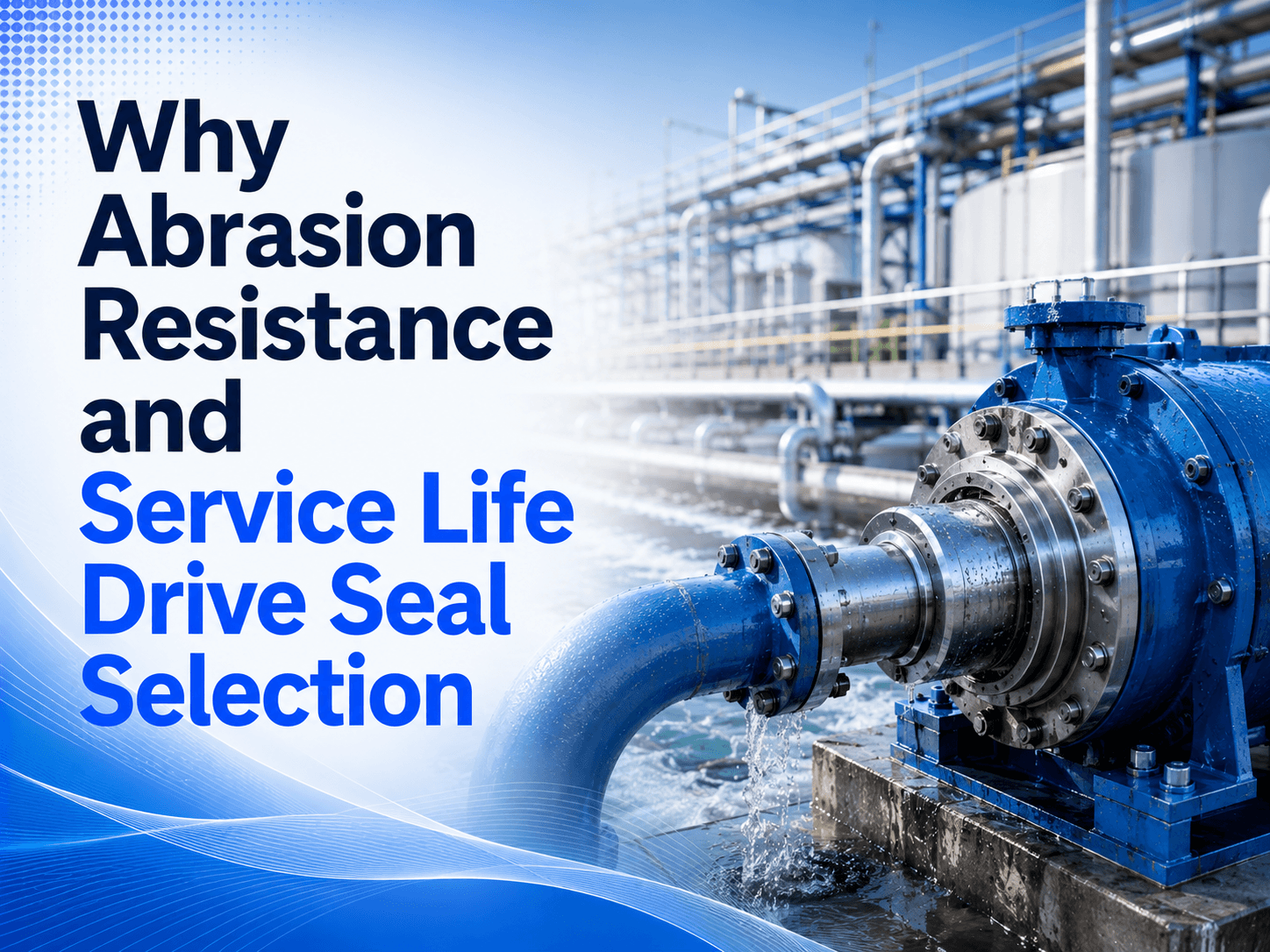
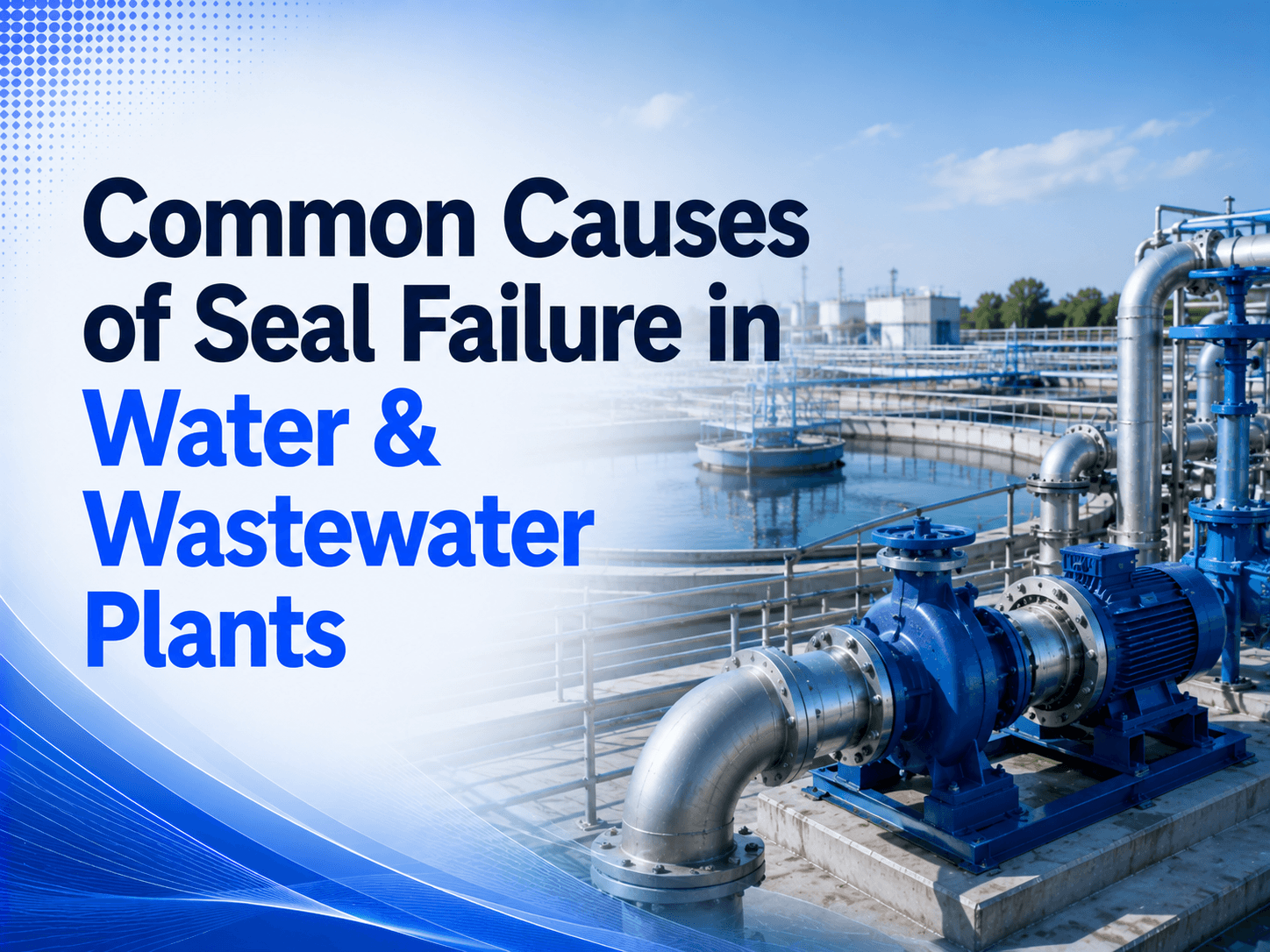
Water and wastewater treatment plants run pumps on some of the most abrasive, solids-laden, and variable media in industrial service — raw sewage, primary and secondary sludge, grit-laden influent, and chemical dosing streams that swing in composition hour to hour. Unlike a process plant running one known fluid, a treatment plant’s seal has to perform across a media profile that’s rarely constant, on equipment that is often decades old and budgeted for long service life rather than frequent replacement.
At Leak-Pack Engineering, we design and manufacture mechanical seals for municipal and industrial water and wastewater equipment — raw sewage pumps, sludge handling systems, chemical dosing pumps, and clarifier and filtration equipment — engineered for abrasion resistance and long service intervals rather than the tight tolerances of a controlled process fluid. Our engineering team works from your actual media composition and duty cycle, not a generic “water duty” seal, to recommend the right face combination, arrangement, and support system.

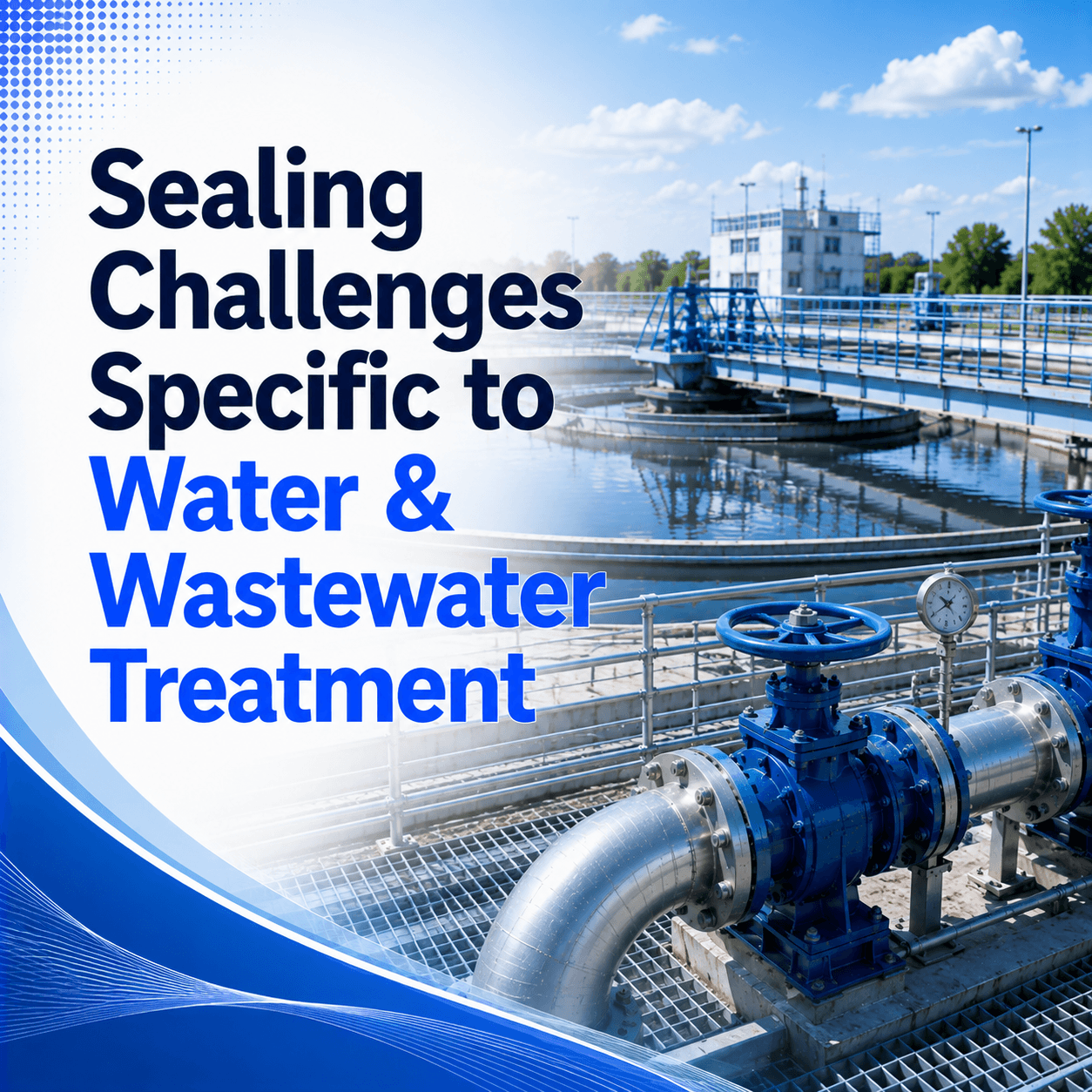
In most process industries, seal selection starts with chemical compatibility or temperature. In water and wastewater treatment, it starts with what’s suspended in the fluid. Grit, rags, fibrous material, and biosolids are constants in raw sewage and sludge handling, and a seal face combination chosen for a clean fluid will wear rapidly — sometimes within weeks — when the actual media carries abrasive solids the original specification didn’t account for.
Municipal treatment plants also operate under public infrastructure budget constraints that push hard toward long mean-time-between-failure rather than lowest first cost, since unplanned downtime on a treatment plant carries regulatory discharge compliance consequences, not just an operating cost. A seal that requires replacement every few months on a sludge pump isn’t just a maintenance line item — it’s a recurring risk to a plant’s ability to stay within its discharge permit limits during the downtime each replacement causes.
This is why we treat seal selection for this industry as primarily a materials and arrangement problem: hard-face combinations sized to the actual abrasive load, and support systems that keep the seal faces flushed and lubricated even when the process media itself would foul a standard seal within days.
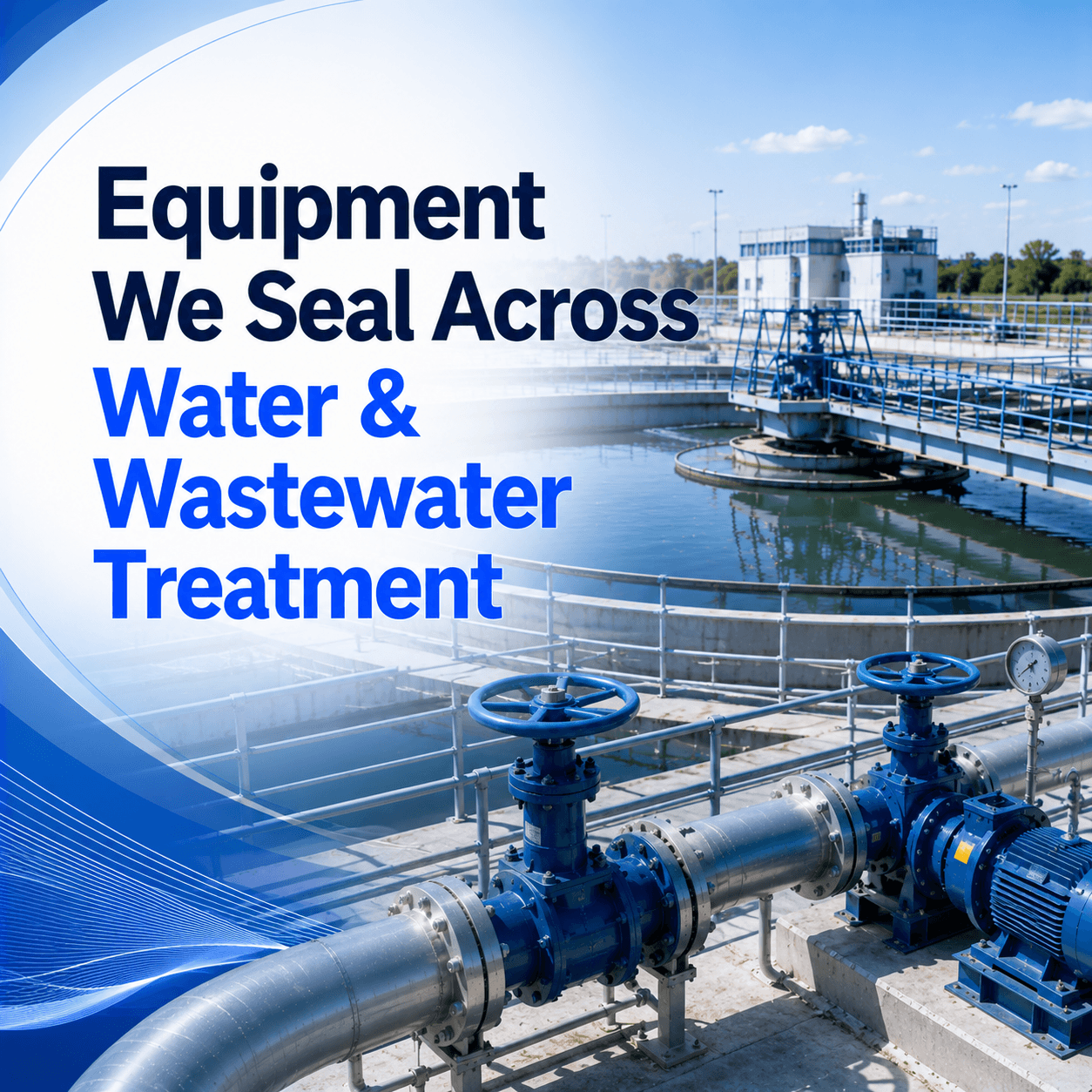
Treatment plants run a wide range of equipment from raw influent through to final effluent discharge, each stage presenting a different media profile. We supply seals across this full range:

As in other heavy-duty industries, these requirements rarely stand alone — a sludge pump seal typically has to resist abrasive wear, survive years between planned interventions, and support the plant’s ability to remain within its discharge permit, all at once. We size the specification to all three, not just the abrasion problem in isolation.


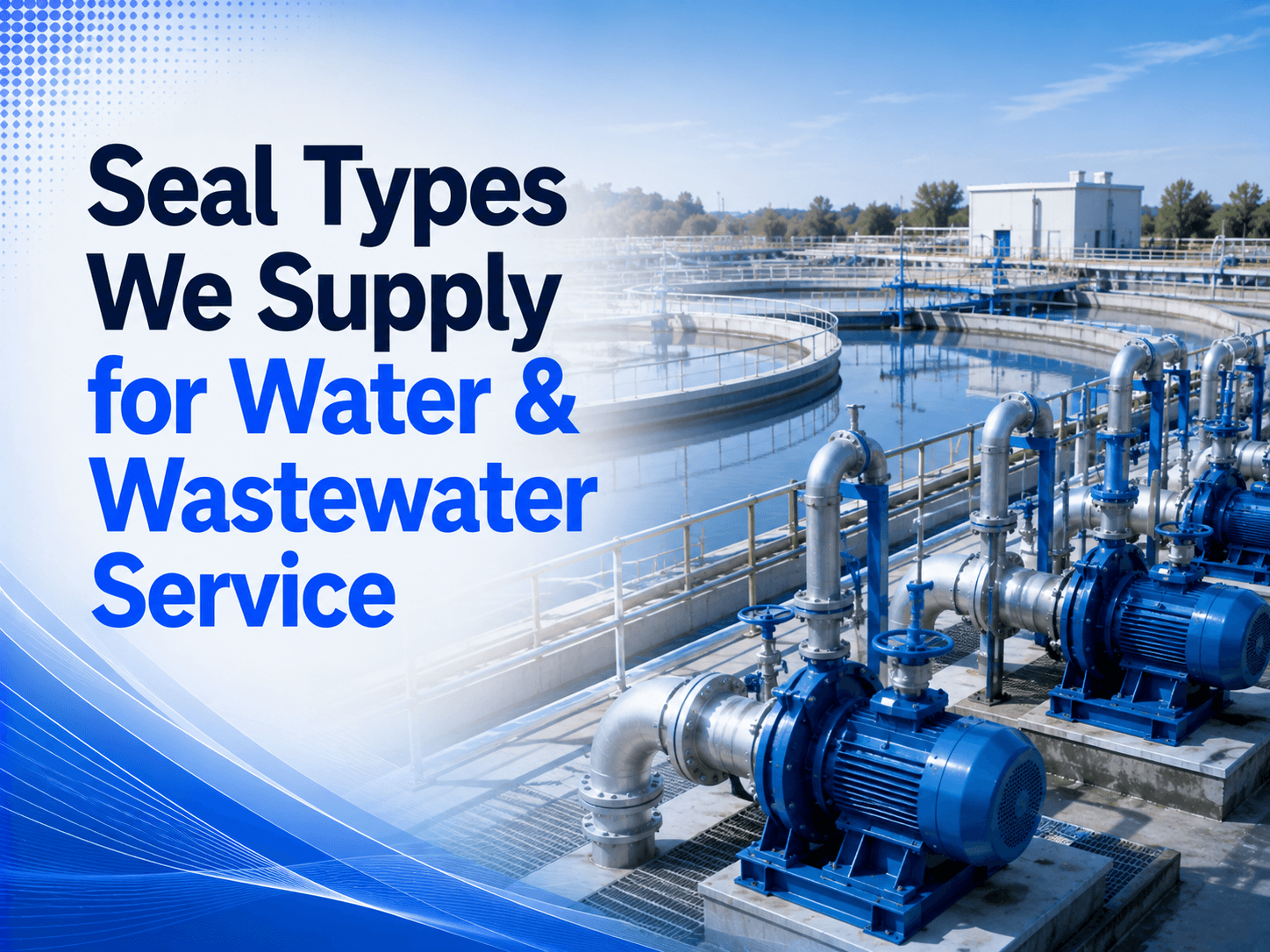
Below is a general guide to the materials we typically recommend by water and wastewater application. Final material selection is always confirmed against your specific media composition, solids load, and dosing chemical, where applicable.
| Application | Seal Face Combinationh | Secondary Seal / Elastomerh | Wetted Metallurgyh |
|---|---|---|---|
| Raw / potable water transfer | Silicon Carbide vs. Carbon | EPDM | 316 Stainless Steel |
| Raw sewage & influent pumping | Tungsten Carbide vs. Silicon Carbide | EPDM / NBR | 316 SS / Duplex |
| Sludge & biosolids handling | Tungsten Carbide vs. Silicon Carbide | EPDM / FKM | 316 SS / Duplex |
| Chemical dosing (chlorine, alum, polymer) | Silicon Carbide vs. Silicon Carbide | FFKM / FKM | 316 SS / Hastelloy |
| Effluent & final discharge pumping | Silicon Carbide vs. Carbon | EPDM | 316 Stainless Steel |
Yes. Our multi-spring seal designs distribute closing force across multiple springs, resisting the clogging and fouling that a single-spring design experiences in raw sewage and influent streams.
For high-solids sludge and biosolids handling, we typically specify hard-face combinations — tungsten carbide or silicon carbide pairings — sized to the actual abrasive load, often paired with split seal designs on larger or continuously running pumps.
Yes. We select seal materials matched to the specific dosing chemical, since chlorine, ferric chloride, and polymer dosing systems each demand different chemical-resistant material combinations.
Yes. We offer fully custom-engineered seal designs for aging or non-standard seal chambers, rather than forcing a standard catalogue seal into a chamber it wasn’t designed for.
We engineer seal support systems — flush and barrier fluid arrangements — that keep seal faces lubricated and free of abrasive solids, extending service intervals well beyond what an unsupported seal achieves on the dirtiest plant media.
Yes. Our cartridge and split seal designs are engineered for retrofit onto most existing water and wastewater pumps, including as upgrades from seals that are wearing out faster than expected under the actual solids load.
Lead times depend on seal size, material, and arrangement complexity. For standard cartridge and split seal replacements, we prioritize fast turnaround given the compliance risk unplanned downtime carries for treatment plant operators — share your seal drawing or pump details with our team for a firm timeline.
Yes. We supply seals across both municipal treatment plants and industrial wastewater treatment systems, engineered to the specific media and duty cycle of each application.
Every water and wastewater application runs a different combination of solids content, chemical exposure, and duty cycle, which is why we don’t work off a fixed catalogue selection for this industry — every seal we quote starts with your actual media profile and service life requirements. We’re happy to work alongside your plant maintenance and operations teams to review seal specifications across an entire pump fleet, not just a single problem pump.
Send us your pump specifications — media composition, solids content, and duty cycle — and our engineering team will recommend the right seal solution for your application. Explore our full range of mechanical seals by industry or send an enquiry directly.